7 Best Personal Blog Platforms in 2026, Compared
Compare the 7 best personal blog platforms on free plans, custom domains, ownership, newsletters and the real yearly cost, with prices checked on vendor pages.
 Shamim Mia, Founder, SerpAstraLast verified November 2, 20267 min read
We compare pricing pages, documentation and public reviews. We never accept payment for rankings.

Key takeaways
- WordPress.com is the best all-round personal blog platform: a free plan, plugins from Personal at $4 a month billed annually, and no hosting work.
- Blogger is the best completely free option, including a custom domain you pay only the registrar for and your own AdSense earnings.
- Ghost and Substack suit bloggers who want readers by email; Ghost takes 0% of subscription revenue, Substack takes 10% of paid subscriptions.
- Medium brings readers to a new writer fastest, but you do not own the audience or get an exportable subscriber list.
On this page
Quick comparison
| Tool | Best for | Starting price | Free plan |
|---|---|---|---|
| WordPress.com | Personal bloggers who want WordPress with a free start and no hosting or updates to manage | $40/mo | Yes (free plan) |
| Blogger | Hobby bloggers who want a genuinely free blog with a custom domain and their own ad income | Free | Yes (free) |
| Ghost | Writers who want a fast, clean blog with a built-in newsletter and optional paid subscriptions | $18/mo | No (14-day trial) |
| Substack | Writers who want to start a newsletter-style blog for free and may charge readers later | Free; 10% of paid subs | Yes (free plan) |
| Medium | New writers who want readers quickly through built-in discovery rather than their own site | Free; Member $5/mo | Yes (free plan) |
| WordPress.org | Bloggers who want full ownership and control and will run their own hosting | Free (software) | Yes (software free) |
| Squarespace | Bloggers who care about design and want a polished site with almost no setup | $25/mo | No (14-day trial) |
Make one of these tools?
We re-check this list every quarter. Send a correction, request a review, or ask about a clearly labeled sponsored spot.
Request a listingThe best personal blog platforms

WordPress.com
Best for: Personal bloggers who want WordPress with a free start and no hosting or updates to manage
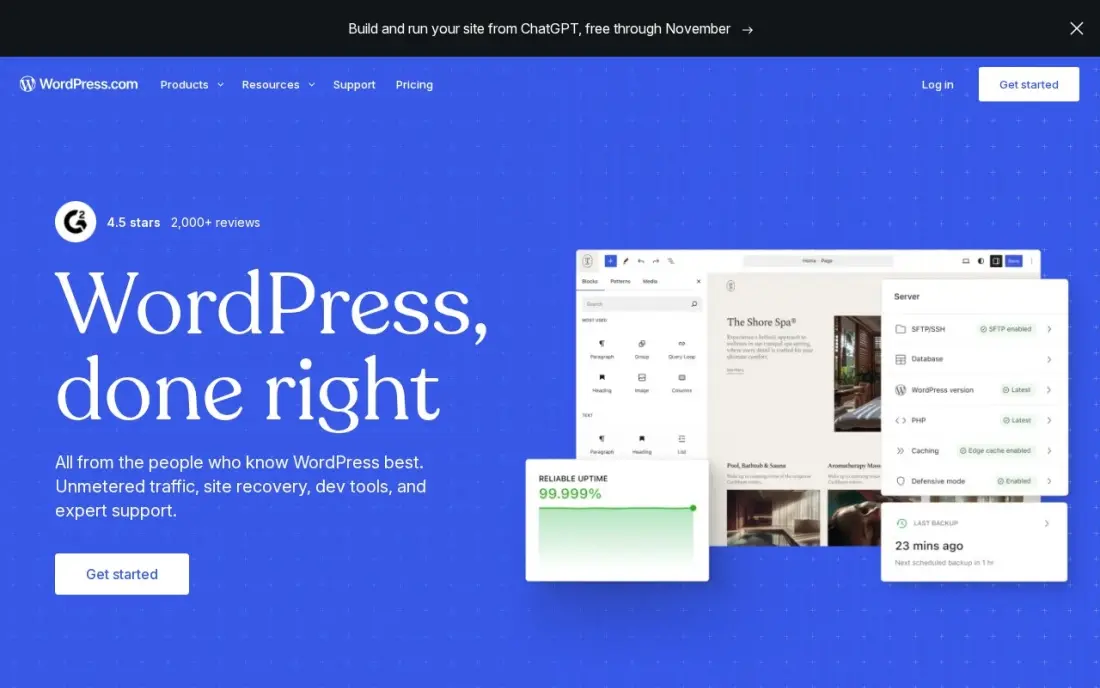
WordPress.com is the best balance for a personal blog. There is a free plan to start, Personal at $4 a month billed annually can now install plugins, and hosting, security, updates and the CDN are always handled for you. Thousands of themes and plugins mean the blog can grow into a portfolio, newsletter or small shop without moving.
The bigger plans are pricier: Business costs $40 a month billed monthly, or $25 billed annually in the first year, then renews at $28. Each site needs its own plan. For most personal bloggers, the free or Personal plan is plenty.
What we like
- The lowest-friction way to run a manufacturing website: hosting, security, updates and CDN included
- Business adds staging, real-time backups, SFTP, WP-CLI and GitHub deployments for developer teams
- More than 60,000 plugins cover product catalogues, quote forms, dealer locators and multilingual sites
- A free plan exists, and Personal at $4 a month billed annually can now install plugins too
Watch out for
- The $25 a month annual figure is a first-year price; Business renews at $28 a month
- Each site needs its own plan, so a second brand site doubles the bill
- Plugin and theme choice is broad, but deep custom development still needs a developer

Blogger
Best for: Hobby bloggers who want a genuinely free blog with a custom domain and their own ad income
Blogger is still the cheapest way to blog. Hosting, a blogspot.com address, HTTPS and themes cost nothing, there are no platform ads, and you can connect a domain you own at no charge beyond the registrar fee. It is also the only free platform here that lets you run your own AdSense and keep the money. Setup takes minutes with a Google account.
Themes and tools feel dated, there are no plugins and only basic SEO controls, and Google has not updated it in years, so you are building on rented ground. For a hobby blog or a writing habit, it is hard to beat free.
What we like
- Completely free, including hosting, a blogspot.com address, HTTPS and themes, with no stated storage limit
- The only free platform here that lets you connect your own domain at no charge and keep your own AdSense money
- Setup takes minutes with a Google account, and there is nothing to update or patch
- No platform ads on your pages
Watch out for
- Themes and design tools feel dated, with no plugin ecosystem and no major update in years
- You build on rented ground: Google can change or close the service, as it has with other products
- Basic SEO controls only, with no built-in newsletter or membership features

Ghost
Best for: Writers who want a fast, clean blog with a built-in newsletter and optional paid subscriptions
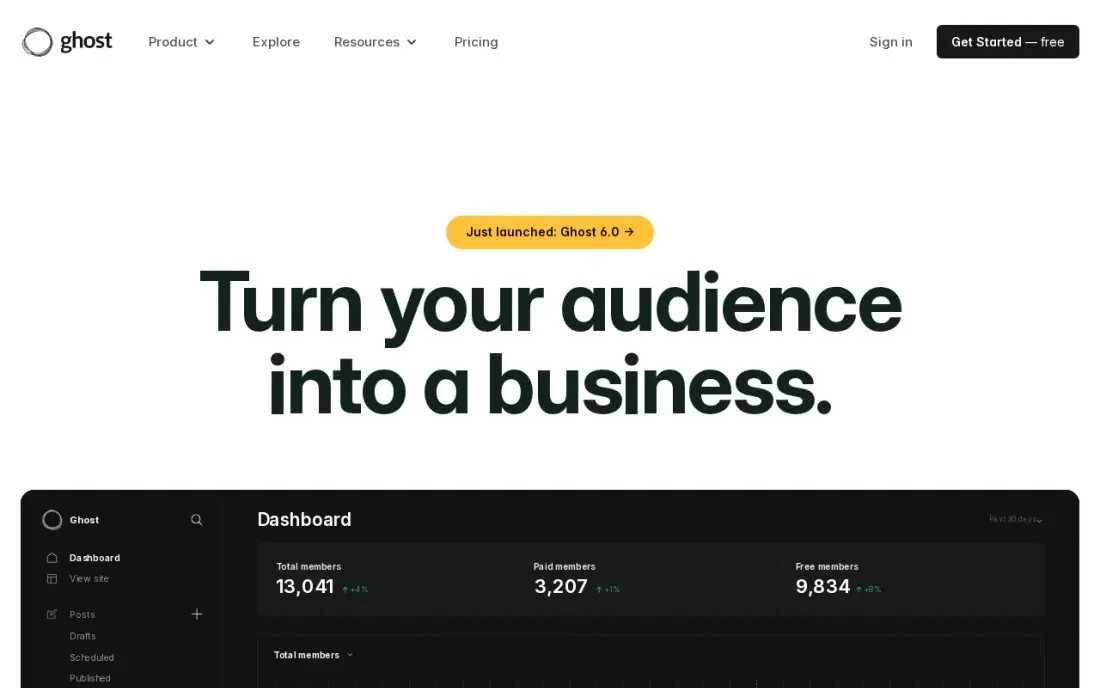
Ghost is the writer's platform: a fast, uncluttered blog with a built-in email newsletter and memberships, no plugins to manage and an editor designed for publishing. Starter costs $18 a month, or $15 billed annually, for up to 1,000 members, and Ghost takes 0% of subscription revenue. The software is open source and free to self-host.
Starter cannot sell paid subscriptions; that needs Publisher from $29 a month billed annually. Starter also allows one staff user and official themes only, and prices rise with member count. Choose Ghost when you want readers by email, not just by search.
What we like
- Takes 0% of subscription revenue on every plan
- Newsletters, memberships and the site in one product — no plugins needed
- A fast, clean editor built for publishing, not for page building
- Free to self-host if you run your own server
Watch out for
- Starter cannot sell paid subscriptions — that needs Publisher from $35/month billed monthly ($29/month billed annually)
- The price rises with member count, not just with features
- One staff user and official themes only on Starter

Substack
Best for: Writers who want to start a newsletter-style blog for free and may charge readers later
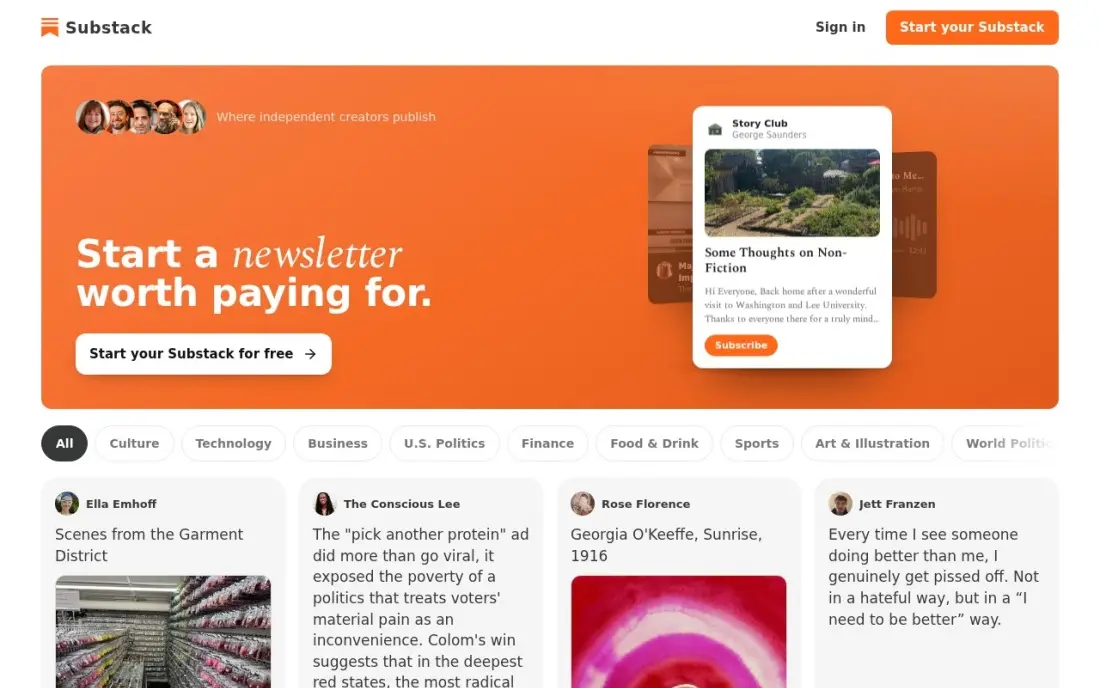
Substack makes a personal blog and newsletter free at any size: publishing, sending, podcasts and video cost nothing, and its recommendation network brings new readers. Turning on paid subscriptions is a switch, and a custom domain costs a one-time $50. Readers pay through your own Stripe account.
Substack takes 10% of paid subscription revenue plus Stripe fees, and the cut never falls as you grow. There is no real website builder, and your blog lives inside Substack's branding. For a free personal newsletter it is excellent; for a paid one, compare Ghost at scale.
What we like
- $0 to start, with no subscriber cap and no send limit
- Paid subscriptions are a switch, not a project
- Built-in recommendations bring new readers to the publication
- A custom domain is available for a one-time $50
Watch out for
- The 10% cut never falls — no tier lowers it as you grow
- Your publication lives inside Substack's branding and discovery rules
- It is a newsletter first — there is no real website builder

Medium
Best for: New writers who want readers quickly through built-in discovery rather than their own site
Medium is the quickest way for a new personal blogger to find strangers who read. Publishing is free, the editor is clean, and the recommendation feed and curation put good stories in front of members. A $5 a month or $50 a year membership unlocks the Partner Program, which pays from members' reading time, and a custom domain.
You do not own the audience: there is no subscriber list to export and no paywall you control, and earnings depend on a payout formula Medium has changed several times. Use it to find readers, ideally alongside a blog you own.
What we like
- Free to publish with a clean editor and a built-in audience
- Publications group writers under one masthead
- The Partner Program pays from member reading time
- No hosting, security or maintenance work at all
Watch out for
- You do not own the audience — there is no subscriber list to export
- A custom domain and the Partner Program need the $5/month membership
- Earnings depend on Medium's changing payout formula

WordPress.org
Best for: Bloggers who want full ownership and control and will run their own hosting
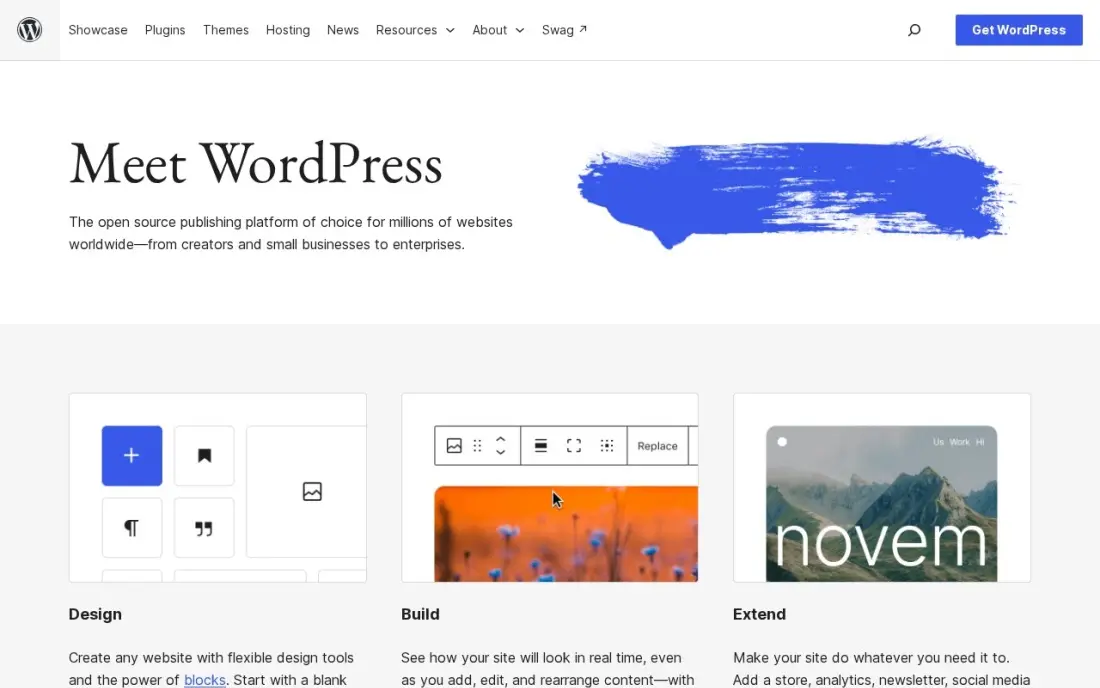
WordPress.org is the free, open-source software behind about 40% of websites, and it gives a personal blogger total ownership. You choose the host, own the database and files, and control every design, plugin and SEO setting, including URLs, redirects and schema. If you ever want to move, everything comes with you.
The software is free, but hosting and a domain are not, and you are responsible for updates, backups and security. A careless plugin can slow or break the blog. Choose it when ownership and flexibility matter more than convenience.
What we like
- Full control of technical SEO: URLs, redirects, schema, sitemaps and robots rules are all yours to change
- Largest plugin ecosystem of any platform here, including free SEO plugins such as Rank Math and Yoast SEO
- No platform lock-in: move hosts, change themes and keep your content and data
Watch out for
- You arrange hosting, security, backups and updates yourself, or pay someone to do it
- Speed and security depend on your host and plugin choices, so a bad setup can hold rankings back

Squarespace
Best for: Bloggers who care about design and want a polished site with almost no setup
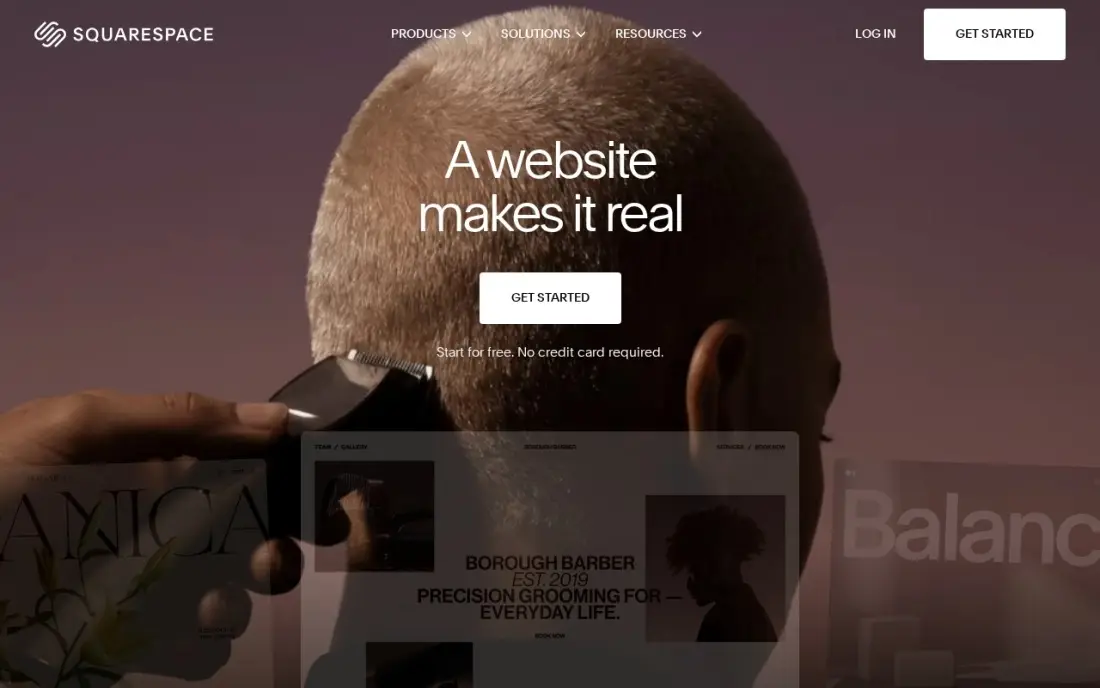
Squarespace gives a personal blog the most polished design in this list, with templates that make photography, travel and food writing look professional out of the box. Hosting and SSL are included, and Basic costs $25 a month, or $19 billed annually, with a free custom domain for the first year on annual billing.
It costs more than other options for a blog that only needs words, Basic allows two contributors and no code injection, and there is no free plan, only a trial. Choose it when the look of the blog matters as much as the writing.
What we like
- The most polished templates here, with strong photography and video presentation for skin care
- Unlimited products, subscription products and abandoned cart recovery on every plan
- Hosting, SSL and a free custom domain for the first year are included on annual billing
- Invoices, memberships and digital content are built in, not add-ons
Watch out for
- Basic adds a 2% Squarespace fee on every online store sale, on top of card processing
- Only two contributors on Basic, so a team quickly outgrows it
- No code injection on Basic, which limits custom tracking and widgets
The best personal blog platform makes writing pleasant, keeps your words online for years and lets readers find you, without turning a hobby into a hosting job. We compared seven platforms, from free hosted blogs to newsletters and self-hosted WordPress, on free plans, custom domains, ownership of your audience, design and yearly cost, and every price below comes from the vendor's own pricing page as checked in November 2026.
How to choose the best personal blog platform
- Decide why you are blogging. Writing for yourself, building an audience, earning money or showing your work each point to a different platform.
- Check who owns the audience. Platforms that let you export your subscriber list protect years of work.
- Use a custom domain if you can. Your own address lets you move platforms without losing readers or search rankings.
- Count the true yearly cost. Free plans, annual billing and first-year prices all change the real number.
- Think about email. A newsletter brings readers back far more reliably than social media.
- Keep maintenance realistic. If you will not update plugins, choose a hosted platform that does it for you.
A personal blog that ranks keeps finding readers long after a post goes out. Our guide to the best blogging platforms for SEO compares the search features in detail, and our title tag checker helps every post earn its click.
Personal blog platforms pricing: what you will actually pay
Take one personal blog with a custom domain for a year. Blogger costs nothing apart from the domain registrar fee. Substack costs nothing for a free newsletter, plus a one-time $50 for a custom domain. Medium is free to publish, and the $5 a month or $50 a year membership unlocks the Partner Program and a custom domain. WordPress.com Personal costs $4 a month billed annually, $48 a year, with plugins.
Design and newsletters cost more. Ghost Starter costs $15 a month billed annually, $180 a year, for up to 1,000 members; adding paid subscriptions needs Publisher from $29 a month billed annually, $348. Squarespace Basic costs $19 a month billed annually, $228 a year. WordPress.org is free software, but hosting and a domain are separate costs that you choose. If you later charge readers, remember Substack's 10% cut against Ghost's 0%.
Know the difference: blog platform vs newsletter platform
A blog platform such as WordPress, Blogger or Squarespace publishes posts on a website that readers visit, usually from search or links. Posts stay organised by category and date, rank in Google over time, and the site can grow into a portfolio or shop. Readers come back when they remember to.
A newsletter platform such as Substack or Ghost delivers each post to readers' inboxes as well as publishing it online. You build a direct list of people who asked to hear from you, which is the most dependable way to keep readers. Ghost combines a proper blog with a newsletter; Substack is newsletter first, with a simpler web presence.
Quick comparison: tool type by need
| Buyer | Best pick | Why |
|---|---|---|
| Most personal bloggers | WordPress.com | Free plan, Personal $4/month billed annually |
| Completely free blogging | Blogger | Free hosting and free custom domain connection |
| Blog plus newsletter | Ghost | 0% revenue share, Starter $15/month billed annually |
| Free newsletter blog | Substack | Free to publish, 10% only on paid subscriptions |
| Finding readers fast | Medium | Built-in discovery, free to publish |
| Full ownership | WordPress.org | Free software on hosting you choose |
| Design-led blogs | Squarespace | Polished templates, Basic $19/month billed annually |
Mistakes to avoid
- Building only on rented land. Keep a custom domain and an email list so a platform change cannot erase your audience.
- Spending weeks on design. Publish ten posts before you buy a premium theme; writing builds the blog, not the template.
- Ignoring titles and descriptions. Clear, specific titles bring search readers for years.
- Not backing up. Export your posts regularly, even on hosted platforms.
- Switching platforms too often. Each move risks broken links; pick one, commit for a year and redirect carefully if you leave.
How we chose
We checked each vendor's own pricing page in November 2026 and recorded free-plan limits, plan prices and fees exactly as shown, including annual-billing and first-year prices. We compared writing experience, custom domains, audience ownership, newsletter features and design, and grouped the platforms by the kind of personal blogger they suit. Ratings come from G2 pages checked on the dates shown in the sources; where we did not read a review page we show no rating. No vendor paid for a place in this list, and none of the links here are affiliate links.
What to do next
Pick the row in the table that matches why you are blogging, start on its free plan or trial, and publish three posts before paying for anything. When you are ready to grow readers from search, book a free SEO review of your blog.
Frequently asked questions
What is the best personal blog platform?
WordPress.com is the best for most personal bloggers because it starts free, grows with plugins from $4 a month billed annually and needs no hosting work. Blogger is the best completely free option, Ghost the best for email newsletters and Squarespace the best for design.
What is the best free blogging platform?
Blogger is completely free, including a custom domain you pay only the registrar for, with no platform ads. WordPress.com, Substack and Medium are also free to publish, and Substack stays free unless you charge readers.
Can I make money from a personal blog?
Yes, through ads, affiliate links, paid subscriptions or products. Blogger lets you run your own AdSense, Ghost and Substack handle paid subscriptions, and Medium's Partner Program pays members-only writers from reading time.
Should I use Medium or my own blog?
Use Medium to reach readers quickly; use your own blog to own the audience and the search traffic. Many writers publish on their own site first and share selected posts on Medium later.
Do I need a custom domain for a personal blog?
Not to start, but it helps. A custom domain looks more professional and lets you move platforms without losing your address. Blogger connects one free of platform charges, Substack charges a one-time $50, and Squarespace includes one free for the first year on annual billing.
Which blog platform is best for SEO?
WordPress, either .org or .com with plugins, gives the most SEO control. Ghost and Squarespace cover the basics well. Substack and Medium are weaker for search because you control less of the site.
Sources we checked (11)
- WordPress.com — wordpress.com/pricing (checked November 12, 2026)
- WordPress.com reviews on G2 (checked November 12, 2026)
- Blogger — www.blogger.com (checked November 5, 2026)
- Ghost — ghost.org/pricing (checked November 12, 2026)
- Ghost reviews on G2 (checked November 12, 2026)
- Substack — substack.com/pricing (checked November 12, 2026)
- Medium — medium.com/plans (checked November 12, 2026)
- WordPress.org — wordpress.org (checked November 2, 2026)
- WordPress.org reviews on G2 (checked November 2, 2026)
- Squarespace — www.squarespace.com/pricing (checked November 12, 2026)
- Squarespace reviews on G2 (checked November 12, 2026)
Make one of these tools?
We re-check this list every quarter. Send a correction, request a review, or ask about a clearly labeled sponsored spot.
Request a listingShamim
Founder of SerpAstra
A full-stack SEO and digital marketer who spends most days on Local SEO for dental practices, AI search visibility and lead generation.
Free SEO and AI visibility audit
Find out what is holding your rankings back
Send us your site. Within 2 business days you get a written audit, an AI visibility check and a short fix list ranked by impact. Free, with no contract attached.
Request my free audit→Related buying guides
 Website Builders & Hosting11 Best Platforms to Start a Blog for 2026 (Pros, Cons and Pricing)Compare the 11 best platforms to start a blog on price, free plans, SEO control and ownership, with every price checked November 5, 2026, before you commit.Read guide →
 Website Builders & Hosting12 Best Blogging Platforms for SEO in 2026 (Pros, Cons and Pricing)Compare the best blogging platform for SEO for your budget: 12 platforms ranked on price, SEO controls and ownership, from free WordPress to Ghost and Webflow.Read guide →
 Website Builders & Hosting10 Best SEO Blog Platforms for 2026 (Pros, Cons and Pricing)10 best SEO blog platforms compared on price, SEO controls, ownership and audience reach. Prices checked on each vendor's pricing page, November 1, 2026.Read guide →