8 Best IT Company Website Design Platforms in 2026, Compared
Compare the 8 best IT company website design platforms on design control, CMS, lead capture, SEO and real yearly cost, with every price checked on vendor pages.
 Shamim Mia, Founder, SerpAstraLast verified November 2, 20268 min read
We compare pricing pages, documentation and public reviews. We never accept payment for rankings.

Key takeaways
- Webflow is the strongest design platform for an IT company site, with a real CMS for case studies on the Premium Site plan at $25 a month billed annually.
- WordPress.org gives the most control and the largest plugin ecosystem for free software, but you arrange hosting, security and updates.
- HubSpot Content Hub suits IT firms that sell through inbound leads, because the website and CRM share one database.
- Framer and Wix are the fastest routes to a modern site for small IT firms; Duda suits agencies building IT client sites at volume.
On this page
Quick comparison
| Tool | Best for | Starting price | Free plan |
|---|---|---|---|
| Webflow | IT companies that want a custom-designed site with a CMS for case studies, services and a blog | $39/mo | Yes (Starter) |
| WordPress.org | IT firms with a developer that want full control, unlimited extensibility and no platform lock-in | Free (software) | Yes (software free) |
| HubSpot Content Hub | B2B IT and managed service firms that win clients through content and inbound leads | $20/seat/mo | Yes (free plan) |
| Framer | Startups and small IT firms that want a modern, fast-loading site live in days | Free; Basic $10/mo (annual) | Yes (free plan) |
| Duda | Web agencies that design and manage many IT and tech client sites from one account | $19/mo (annual) | No (14-day trial) |
| Wix | Small IT service businesses that want an all-in-one site with bookings and no code | $36/mo | Yes (free plan) |
| Squarespace | Small IT consultancies that want a polished, low-maintenance brochure site | $25/mo | No (14-day trial) |
| WordPress.com | IT firms that want WordPress flexibility without running hosting or updates | $40/mo | Yes (free plan) |
Make one of these tools?
We re-check this list every quarter. Send a correction, request a review, or ask about a clearly labeled sponsored spot.
Request a listingThe best IT company website design platforms

Webflow
Best for: IT companies that want a custom-designed site with a CMS for case studies, services and a blog
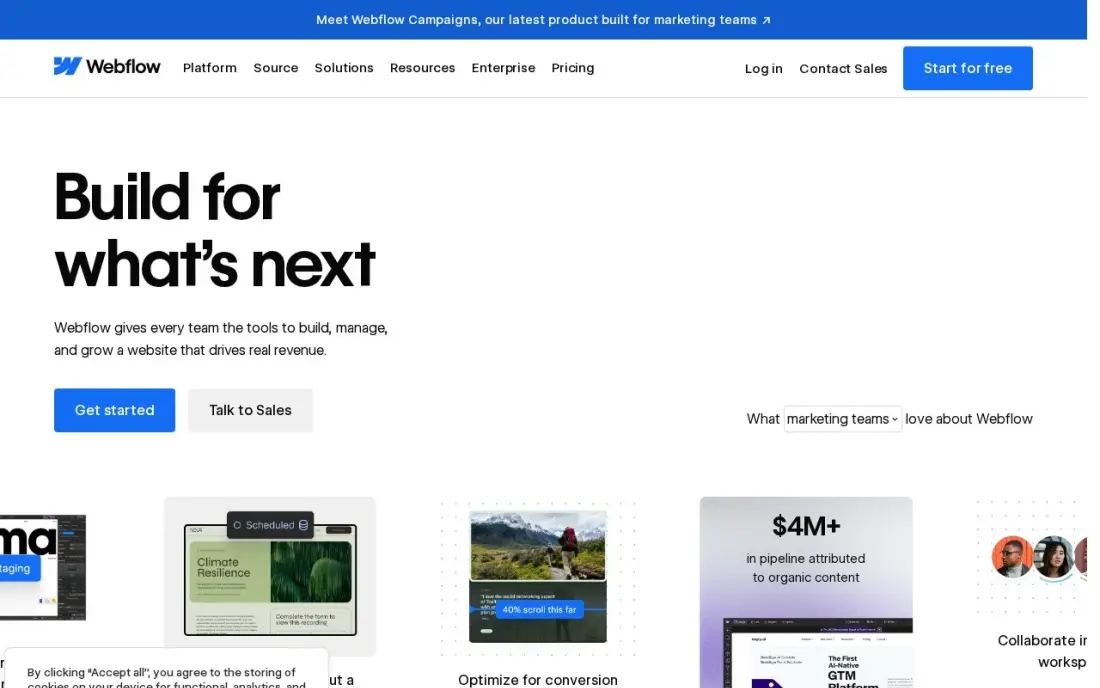
Webflow is the best fit when an IT company wants its site to look custom rather than templated. Designers build visually with full control over layout, interactions and responsive behaviour, and the CMS holds case studies, service pages, team profiles and blog posts. The Premium Site plan costs $25 a month billed annually, or $39 monthly, with 20,000 CMS items, site search and 50 GB of bandwidth.
Two costs catch buyers out: the cheaper Basic plan has no CMS, and editing seats are billed separately at $15 or $39 a month each. There are no plugins to patch, which suits security-minded IT firms.
What we like
- Visual designer with a real CMS: 20,000 CMS items and 40 collections on Premium
- Premium includes site search, 50 GB bandwidth and code components
- No plugins to update; hosting, security and the CMS come from one vendor
Watch out for
- Basic at $15 a month has no CMS at all, so a blog or content site must pay $25 a month billed annually
- Editing seats are a separate bill: $15 a month for a limited seat and $39 for a full seat, billed yearly

WordPress.org
Best for: IT firms with a developer that want full control, unlimited extensibility and no platform lock-in
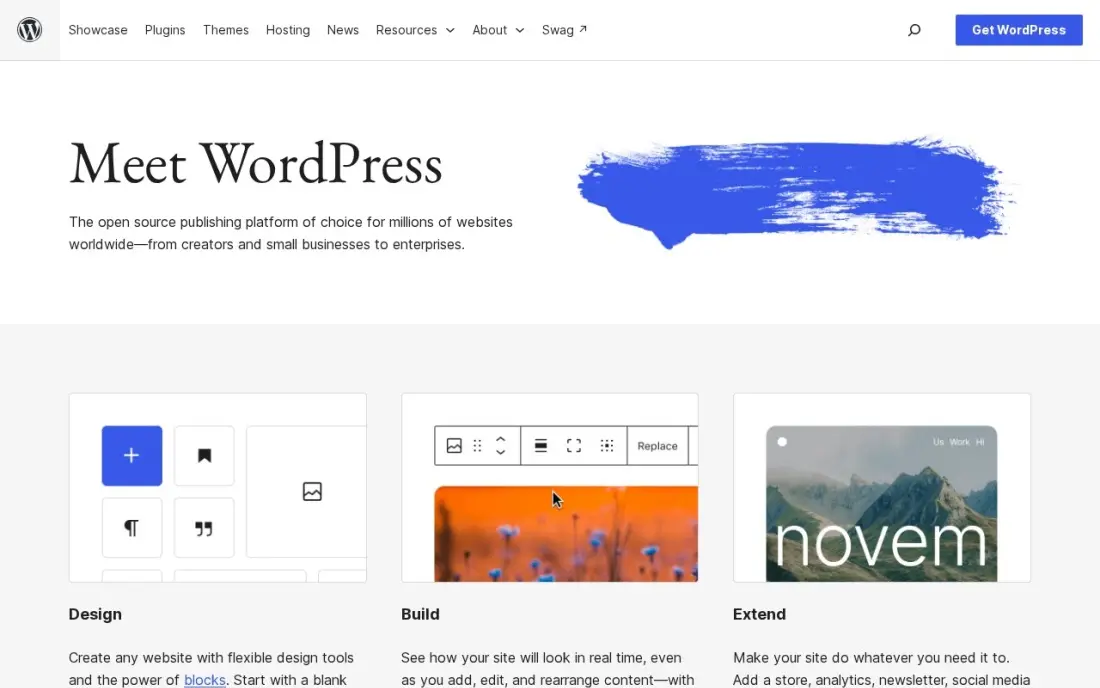
WordPress.org is free open-source software that runs about 40% of all websites, and it gives an IT company total control: custom themes, any integration through plugins or code, full access to URLs, schema and redirects, and the freedom to move hosts. For a firm with developers in-house, building the company site on WordPress costs only hosting, a domain and time.
That control is also the workload. You arrange hosting, security, backups and updates, and a careless plugin choice can slow the site or open a hole, which looks bad for an IT company. Choose it when you have the skills to run it properly.
What we like
- Full control of technical SEO: URLs, redirects, schema, sitemaps and robots rules are all yours to change
- Largest plugin ecosystem of any platform here, including free SEO plugins such as Rank Math and Yoast SEO
- No platform lock-in: move hosts, change themes and keep your content and data
Watch out for
- You arrange hosting, security, backups and updates yourself, or pay someone to do it
- Speed and security depend on your host and plugin choices, so a bad setup can hold rankings back

HubSpot Content Hub
Best for: B2B IT and managed service firms that win clients through content and inbound leads
HubSpot Content Hub suits an IT company whose website is a lead machine. The website, blog, landing pages and forms share one database with HubSpot's CRM, so every whitepaper download and contact form becomes a contact record tied to a deal. Starter costs $20 a seat a month billed monthly, and there is a free tier with basic website and blogging tools.
Smart content, A/B testing and HubDB need Professional at $500 a month, and per-seat pricing grows with every hire. The $7-a-seat annual figure is a new-customer promotion, not the standard rate. Choose it when sales and marketing already run on HubSpot.
What we like
- The only platform here where the website, blog, CRM and analytics share one database, so every article ties back to a contact and a deal
- A genuinely free tier covers the basic website and blogging tools at $0
- AI tools including Content Remix and Breeze are built in, not bolted on
- Professional at $450 a month billed annually adds smart content, A/B testing and HubDB
Watch out for
- Per-seat pricing grows with every hire, so a five-person team pays $100 a month at list price
- The content features that matter most, like smart content and A/B testing, need Professional at $500 a month
- The $7-a-seat annual figure is a new-customer promo, not the standard rate

Framer
Best for: Startups and small IT firms that want a modern, fast-loading site live in days
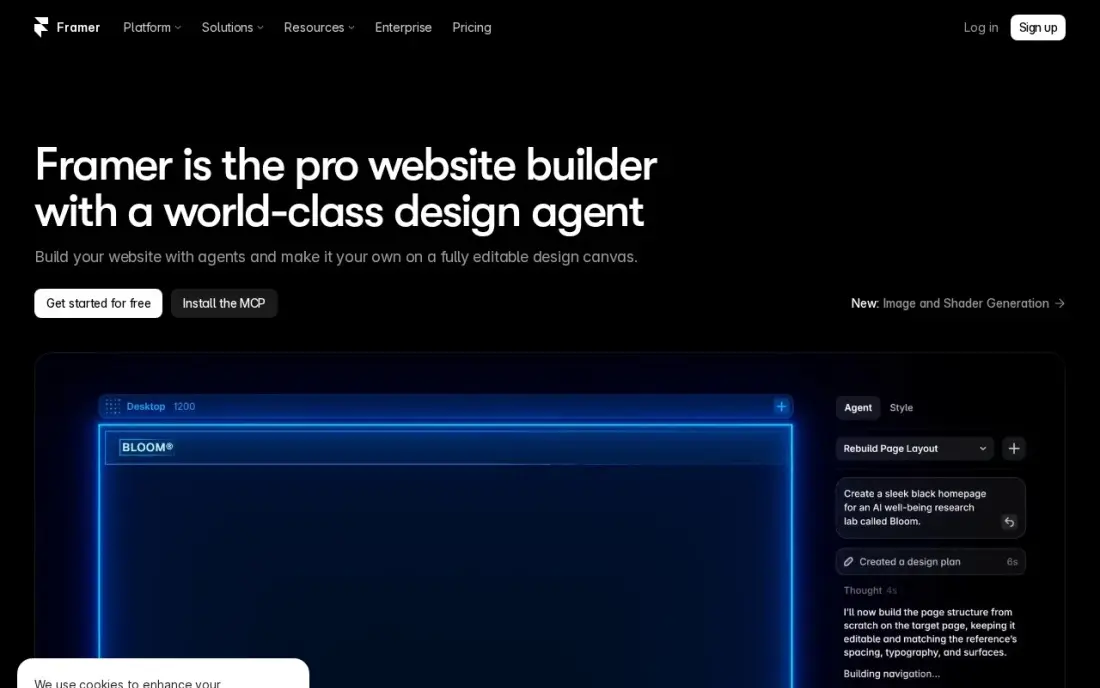
Framer turns a design or a prompt into a modern, animated website quickly, which suits a young IT startup or software consultancy that needs credibility fast. Basic costs $10 a month billed yearly with a custom domain, two CMS collections and 1,000 items, and a free plan lets you build on a framer.website subdomain before paying. Hosting and SEO controls are included.
Two CMS collections and 1,000 items cap a large case-study library, extra editors cost $20 a month each, and there is no plugin marketplace. For a focused five-to-ten-page company site with a small blog, it is the fastest good-looking option.
What we like
- AI generation turns a prompt into a publishable modern site
- Modern templates and smooth interactions with no code
- Custom domain and your own branding on Basic
- Fast managed hosting with SEO controls included
Watch out for
- Basic allows only 2 CMS collections and 1,000 items
- Extra editors cost $20/month each, on top of the site plan
- A smaller ecosystem than WordPress — no plugin marketplace

Duda
Best for: Web agencies that design and manage many IT and tech client sites from one account

Duda is built for professionals who design websites for clients, so it suits an agency that serves IT companies. Client management, team collaboration and white-label options sit in one account, hosting runs on AWS, and Basic costs $19 a month billed annually, or $25 monthly, with unlimited storage and bandwidth. It holds a 4.7 score from 811 G2 reviews.
Basic includes only one published site, and each extra site costs $19 a month, so pricing scales with your client list. White-label branding needs the $149 White Label plan. For an IT company building only its own site, Webflow or Framer is simpler.
What we like
- Built for client work: client management, team collaboration and white-label options in one account
- Basic includes unlimited storage and bandwidth, AWS hosting and 150 monthly AI credits
- AI tools include an AI Visibility add-on from $19 a month for tracking brand mentions in AI answers
Watch out for
- Basic includes only one published site, and each extra site costs $19 a month
- White-label branding waits for the $149-a-month White Label plan
- Priority support starts on Agency at $52 a month billed annually, not on Basic

Wix
Best for: Small IT service businesses that want an all-in-one site with bookings and no code

Wix is the easy all-in-one route for a small IT support or repair business. Templates, a blog, bookings for consultations and marketing tools sit in one dashboard, and nobody needs to write code. There is a free plan for building, and Core costs $36 a month, or $29 billed annually, with payments through Wix Payments at no platform fee.
Wix often runs 50%-off first-year promotions, so budget on the renewal price, and design freedom is narrower than Webflow. Core caps storage at 50 GB and five collaborators. It suits a local IT firm that wants to be online this week.
What we like
- Core takes payments with 0% platform fee through Wix Payments, at 2.9% + 30c a card sale
- Bookings, a blog and marketing tools sit in the same dashboard as the store
- Hundreds of templates and an app market, with no code needed to launch
- A free plan exists for the website, so the brand can build before it pays
Watch out for
- Light at $17 a month billed annually cannot take payments, so selling starts at Core
- Core's 50 GB of storage and 5 collaborators cap a growing catalog and team
- Wix runs 50%-off first-year promotions often, so the renewal price is the honest one to budget

Squarespace
Best for: Small IT consultancies that want a polished, low-maintenance brochure site
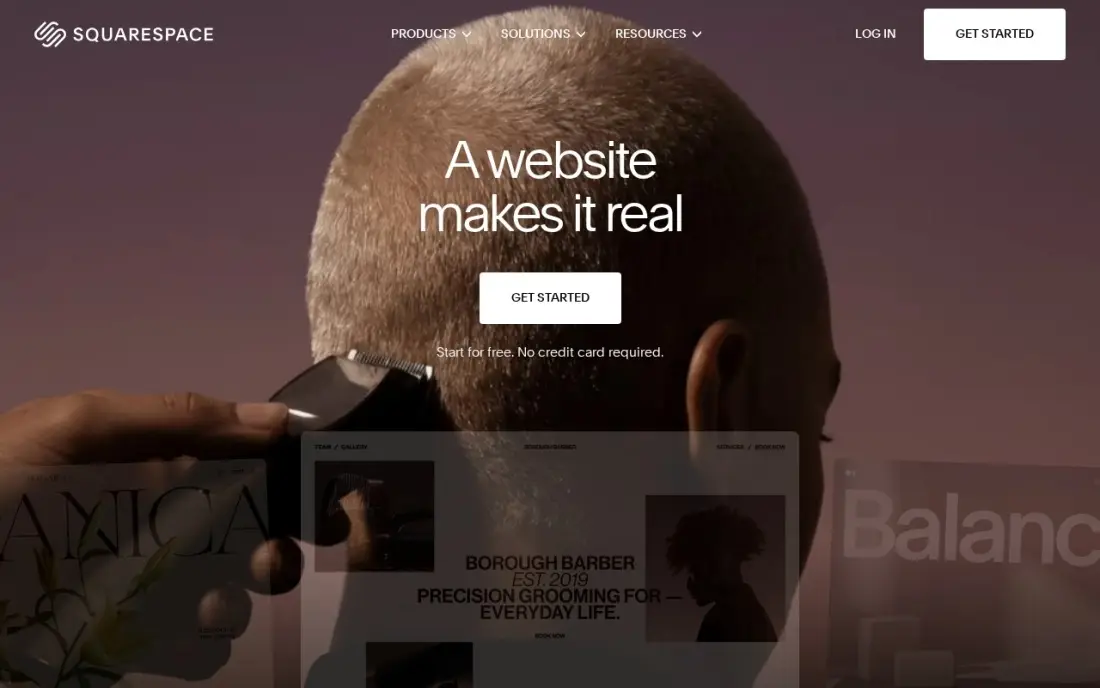
Squarespace gives a small IT consultancy a polished site with almost no setup. The templates are among the most refined available, hosting and SSL are included, and the platform handles updates and security. Basic costs $25 a month, or $19 billed annually, with a free custom domain for the first year on annual billing.
Basic allows only two contributors and no code injection, which limits custom tracking scripts and integrations an IT firm may want to show off. It is a brochure-site tool rather than a platform for deep customisation, which suits many small consultancies perfectly well.
What we like
- The most polished templates here, with strong photography and video presentation for skin care
- Unlimited products, subscription products and abandoned cart recovery on every plan
- Hosting, SSL and a free custom domain for the first year are included on annual billing
- Invoices, memberships and digital content are built in, not add-ons
Watch out for
- Basic adds a 2% Squarespace fee on every online store sale, on top of card processing
- Only two contributors on Basic, so a team quickly outgrows it
- No code injection on Basic, which limits custom tracking and widgets

WordPress.com
Best for: IT firms that want WordPress flexibility without running hosting or updates
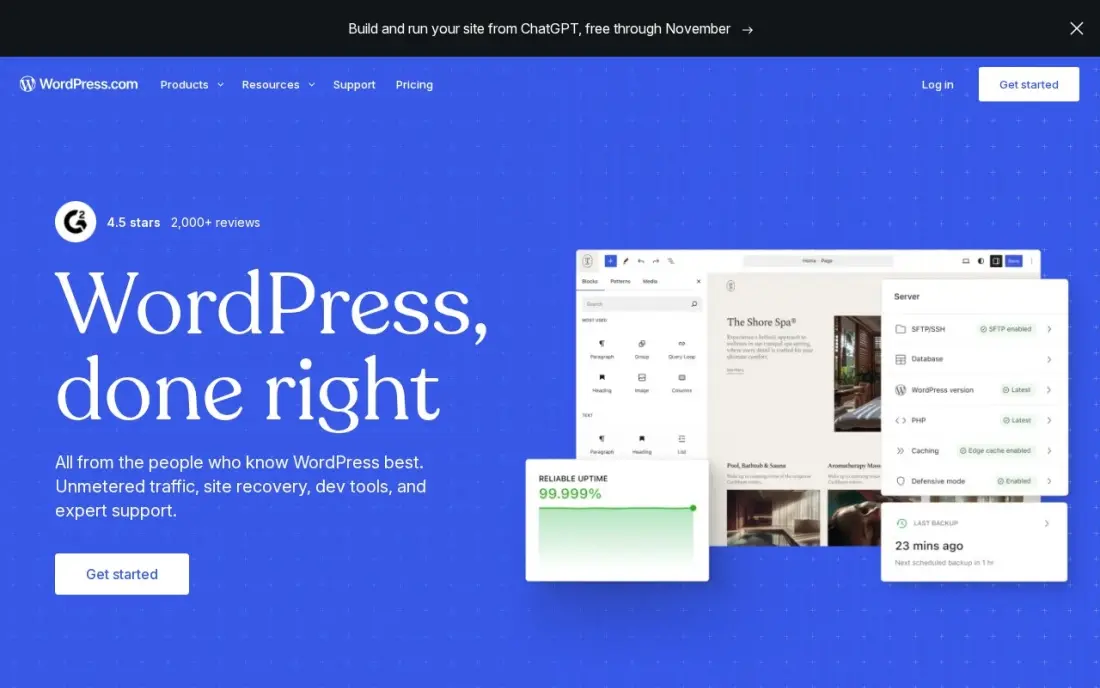
WordPress.com gives an IT company the WordPress ecosystem without the server work: hosting, security, updates and the CDN come with the plan. Business costs $40 a month billed monthly, or $25 billed annually in the first year, and adds staging, real-time backups, SFTP, WP-CLI and GitHub deployments, which developers on the team will appreciate.
Business renews at $28 a month on annual billing, and each site needs its own plan. Plugins are now available from Personal at $4 a month billed annually, but deep custom work still needs a developer. It suits firms that want WordPress managed for them.
What we like
- The lowest-friction way to run a manufacturing website: hosting, security, updates and CDN included
- Business adds staging, real-time backups, SFTP, WP-CLI and GitHub deployments for developer teams
- More than 60,000 plugins cover product catalogues, quote forms, dealer locators and multilingual sites
- A free plan exists, and Personal at $4 a month billed annually can now install plugins too
Watch out for
- The $25 a month annual figure is a first-year price; Business renews at $28 a month
- Each site needs its own plan, so a second brand site doubles the bill
- Plugin and theme choice is broad, but deep custom development still needs a developer
The best IT company website design platform lets you build a site that looks as competent as your engineering, explains your services clearly and turns visitors into qualified leads. We compared eight platforms on design control, CMS depth for case studies and blogs, lead capture, SEO controls, maintenance and yearly cost, and every price below comes from the vendor's own pricing page as checked in November 2026.
How to choose the best it company website design platform
- Decide who will build and maintain it. A designer suits Webflow or Framer; a developer suits WordPress; a busy owner suits Wix or Squarespace.
- Check the CMS for case studies. IT buyers want proof, so you need a structured collection for case studies, services and team profiles.
- Connect forms to your CRM. Every enquiry should land in your sales pipeline automatically, not in an inbox.
- Look at SEO controls. Custom titles, meta descriptions, redirects and schema let service pages rank for what buyers search.
- Count editor seats. Some platforms bill each editor separately, which adds up for a marketing team.
- Keep it secure and fast. A slow or hacked site is a poor advert for an IT company; fewer plugins usually means fewer problems.
Design wins attention, but service pages that rank win leads. Our guide to the best website platforms for SEO compares the technical features that matter, and our monthly SEO service builds and ranks the service pages IT buyers search for.
IT company website design platforms pricing: what you will actually pay
Take a ten-person IT company with two people editing the site. On Webflow, the Premium Site plan costs $25 a month billed annually, or $300 a year, and one extra full editor seat at $39 a month billed yearly adds $468, for $768 a year. Framer Basic costs $10 a month billed yearly, $120 a year, plus $20 a month for a second editor, or $360 a year in total. Wix Core costs $29 a month billed annually, or $348 a year, and Squarespace Basic $19 a month billed annually, or $228 a year.
HubSpot Content Hub Starter costs $20 a seat a month billed monthly, so two seats are $480 a year, before any upgrade to Professional at $500 a month. WordPress.com Business costs $25 a month in the first year on annual billing and renews at $28. WordPress.org software is free, but hosting, premium plugins and developer time are real costs. Design and copywriting, usually the largest part of a new site, are extra on every platform.
Know the difference: website builder vs CMS platform
A website builder such as Framer, Wix, Squarespace or Duda gives you hosting, templates, a visual editor and security in one subscription. You launch fast, nothing needs patching, and the vendor handles performance. The limits are integrations and structure: complex data, portals or custom functionality may be out of reach.
A CMS platform such as WordPress, or a design-led CMS like Webflow, gives you structured content types and more freedom to extend the site. WordPress.org adds unlimited integrations and full code access in exchange for maintenance; Webflow sits between the two, with a real CMS and no plugins to update. Most IT firms with a content and case-study strategy end up on a CMS rather than a basic builder.
Quick comparison: tool type by need
| Buyer | Best pick | Why |
|---|---|---|
| Design-led IT firms | Webflow | Custom design plus CMS, $25/month billed annually |
| Firms with developers | WordPress.org | Free software, full control and integrations |
| Inbound B2B sales | HubSpot Content Hub | Website and CRM in one database |
| Startups launching fast | Framer | Modern site from $10/month billed yearly |
| Agencies with IT clients | Duda | Client management, Basic $19/month billed annually |
| Small IT service businesses | Wix | All-in-one with bookings, Core $29/month billed annually |
| Small consultancies | Squarespace | Polished templates, Basic $19/month billed annually |
| Managed WordPress | WordPress.com | Hosting and updates included, Business $25/month first year |
Mistakes to avoid
- Describing technology instead of outcomes. Buyers want to know what problem you solve and for whom; lead with results, not your stack.
- One page for every service. A single services page cannot rank for many searches; give each core service its own page.
- Hiding case studies. Proof sells IT services; make case studies easy to find and include numbers.
- Launching without redirects. If you are replacing an old site, map every old URL to its new home before launch.
- Forgetting to track enquiries. Set up form and call tracking on day one so you know which pages bring leads.
How we chose
We checked each vendor's own pricing page in November 2026 and recorded plan prices exactly as shown, including annual-billing figures and separately billed editor seats. We compared design control, CMS depth, lead capture, SEO controls and maintenance work, and grouped the platforms by the kind of IT company they suit. Ratings come from G2 pages checked on the dates shown in the sources; where we did not read a review page we show no rating. No vendor paid for a place in this list, and none of the links here are affiliate links.
What to do next
List your five core services and three best case studies, then build one service page and one case study on the free plan or trial of two platforms from the table. Pick the one your team can update without help. When the structure is ready, book a free SEO review before launch.
Frequently asked questions
What is the best platform for IT company website design?
Webflow is the best for a custom-designed IT company site with case studies and a blog, from $25 a month billed annually. WordPress.org gives the most control for firms with developers, HubSpot Content Hub suits inbound-led B2B firms, and Framer is the fastest route for startups.
What pages should an IT company website have?
At minimum: a homepage that names who you serve, a page for each service, case studies with measurable results, an about page with the team and certifications, a contact page, and a blog or resources section that answers buyers' technical questions.
How much does an IT company website cost to run?
Platform costs run from $10 a month billed yearly on Framer Basic and $19 billed annually on Squarespace or Duda, to $25 on Webflow Premium Site and Wix Core at $29 billed annually. WordPress.org is free software, but hosting and maintenance add cost. Design work is a separate, larger cost.
Should an IT company use WordPress or Webflow?
Use WordPress if you have developers and need integrations or full control. Use Webflow if design quality matters most and you want hosting, security and the CMS from one vendor with no plugins to maintain.
How can an IT company website generate more leads?
Lead generation comes from specific service pages that rank for what buyers search, case studies with real numbers, clear calls to action on every page and forms connected to your CRM. HubSpot Content Hub ties forms to the CRM natively; other platforms do it through integrations.
Is a website builder good enough for an IT company?
For most small and mid-size IT firms, yes. Webflow, Framer and Wix produce professional, fast sites. Larger firms with complex integrations, portals or many regions usually need WordPress or a headless CMS with developers.
Sources we checked (15)
- Webflow — webflow.com/pricing (checked November 10, 2026)
- Webflow reviews on G2 (checked November 10, 2026)
- WordPress.org — wordpress.org (checked November 2, 2026)
- WordPress.org reviews on G2 (checked November 2, 2026)
- HubSpot Content Hub — www.hubspot.com/products/content (checked November 12, 2026)
- HubSpot Content Hub reviews on G2 (checked November 12, 2026)
- Framer — www.framer.com/pricing (checked November 5, 2026)
- Duda — www.duda.com/pricing (checked November 10, 2026)
- Duda reviews on G2 (checked November 10, 2026)
- Wix — www.wix.com/plans (checked November 12, 2026)
- Wix reviews on G2 (checked November 12, 2026)
- Squarespace — www.squarespace.com/pricing (checked November 12, 2026)
- Squarespace reviews on G2 (checked November 12, 2026)
- WordPress.com — wordpress.com/pricing (checked November 12, 2026)
- WordPress.com reviews on G2 (checked November 12, 2026)
Make one of these tools?
We re-check this list every quarter. Send a correction, request a review, or ask about a clearly labeled sponsored spot.
Request a listingShamim
Founder of SerpAstra
A full-stack SEO and digital marketer who spends most days on Local SEO for dental practices, AI search visibility and lead generation.
Free SEO and AI visibility audit
Find out what is holding your rankings back
Send us your site. Within 2 business days you get a written audit, an AI visibility check and a short fix list ranked by impact. Free, with no contract attached.
Request my free audit→Related buying guides
 Website Builders & Hosting8 Best Website Platforms for SEO in 2026 (Pros, Cons and Pricing)The 8 best website platform for SEO options compared on price, controls, speed and ease of use, with real prices checked November 2, 2026, and pros and cons.Read guide →
 SEO & AI Search VisibilityBest CMS for SEO in 2026: 8 Options Ranked and Reviewed8 best CMS for SEO compared with real 2026 prices, free plans and SEO controls. WordPress, Webflow, Shopify and more, ranked by fit for a small business site.Read guide →
 MarketingBest Landing Page Software for 2026: 10 Options Compared by Use CaseCompare the 10 best landing page software tools in 2026 on price, A/B testing, AI builders and free plans, with prices checked November 4, 2026.Read guide →