8 Best Ecommerce Platforms for Medium Businesses in 2026, Compared
Compare the 8 best ecommerce platforms for medium business on staff seats, sales caps, integrations and real yearly cost, with prices checked on vendor pages.
 Shamim Mia, Founder, SerpAstraLast verified November 1, 20268 min read
We compare pricing pages, documentation and public reviews. We never accept payment for rankings.

Key takeaways
- BigCommerce is the best ecommerce platform for most medium businesses: unlimited staff accounts and products on every plan, though its plans step up with annual sales.
- Shopify has the biggest ecosystem, but a team needs Grow at $105 a month for more than one staff account, so price the plan your team size requires.
- Lightspeed Retail fits mid-size retailers with several shops, joining POS, inventory and a basic online store from $89 a month billed annually.
- Adobe Commerce and Medusa are for medium businesses with developers; one is quote-only enterprise software, the other open source with Cloud plans from $29 a month.
On this page
Quick comparison
| Tool | Best for | Starting price | Free plan |
|---|---|---|---|
| BigCommerce | Medium businesses with growing teams and catalogs that want features built in rather than bought as apps | $39/mo | No (15-day trial) |
| Shopify | Medium businesses that want the largest app ecosystem and sell across online, social and in-person channels | $39/mo | No (trial) |
| WooCommerce | Medium businesses on WordPress with a developer or agency that want full control and no platform fee | Free | Yes (free plugin) |
| Lightspeed Retail | Mid-size retailers with several shops that need one system for POS, stock and online sales | $89/mo (annual) | No (trial) |
| Adobe Commerce | Upper-mid-size businesses with complex catalogs, B2B accounts and an in-house development team | Custom quote | No (demo only) |
| Wix | Service-led medium businesses that sell products alongside bookings, content and events | $36/mo | Yes (free plan) |
| PrestaShop | International medium businesses with technical staff that want free, open-source software | Free (Classic) | Yes (free download) |
| Medusa | Medium businesses with developers that want an open-source commerce backend with no lock-in | $29/mo (Cloud) | No (Cloud) |
Make one of these tools?
We re-check this list every quarter. Send a correction, request a review, or ask about a clearly labeled sponsored spot.
Request a listingThe best ecommerce platforms for medium-sized businesses

BigCommerce
Best for: Medium businesses with growing teams and catalogs that want features built in rather than bought as apps
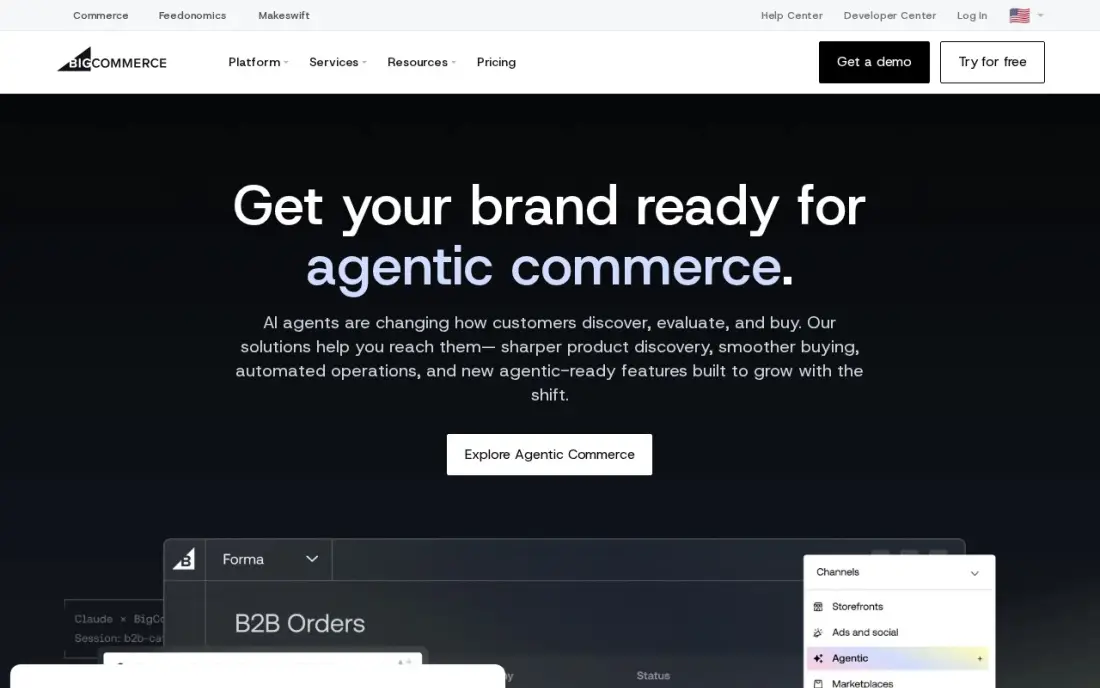
BigCommerce suits the stage where a business has a real team: unlimited staff accounts, products and storage on every plan, with multi-currency selling, gift cards, product filtering and real-time shipping quotes included. That keeps the app bill down and lets marketing, customer service and warehouse staff each have their own login.
Plan for the sales thresholds. Core, at $39 a month or $29 billed annually, covers $30,000 in trailing 12-month sales, and the store auto-upgrades as sales grow, so a medium business will sit on a higher tier. Price the plan that matches your actual annual online revenue before comparing.
What we like
- Unlimited products, staff accounts and storage on every plan, with real-time shipping quotes
- Multi-currency selling and gift cards are included on Core, not held for a higher tier
- No platform fee on orders through approved embedded payment providers such as Stripe and PayPal
- Built-in SEO and product filtering for catalogs with many variants
Watch out for
- The plan auto-upgrades when trailing 12-month sales pass $30,000, so growth raises the bill
- A 2% fee applies on orders through payment gateways outside BigCommerce's approved list
- Abandoned cart recovery is not included on the entry Core plan

Shopify
Best for: Medium businesses that want the largest app ecosystem and sell across online, social and in-person channels

Shopify is the safe choice for a business that sells everywhere: online, on Instagram and TikTok, in AI chats and in person through POS, with one catalog and one stock count. Its app and theme library is the largest in ecommerce, so most integrations a medium business needs already exist, and Shopify Payments charges 2.9% + 30c online with no extra platform fee.
Team size decides the plan. Basic at $39 a month, or $29 billed annually, gives only the owner a staff account, so a medium business starts on Grow at $105 a month. Apps then add to the bill, and a 2% fee applies on third-party gateways on Basic.
What we like
- The largest app and theme ecosystem of any hosted ecommerce platform
- Unlimited products, hosting, SSL and checkout included, with AI-chat selling on the entry plan
- Shopify Payments charges 2.9% + 30c online with no extra platform fee
- POS for in-person sales at markets and pop-ups is included on Basic
Watch out for
- Apps and a paid theme push the real bill well above the $39 headline price
- A 2% fee applies on sales through a third-party payment gateway on Basic
- Only the store owner gets a staff account on Basic, so a small team must upgrade

WooCommerce
Best for: Medium businesses on WordPress with a developer or agency that want full control and no platform fee
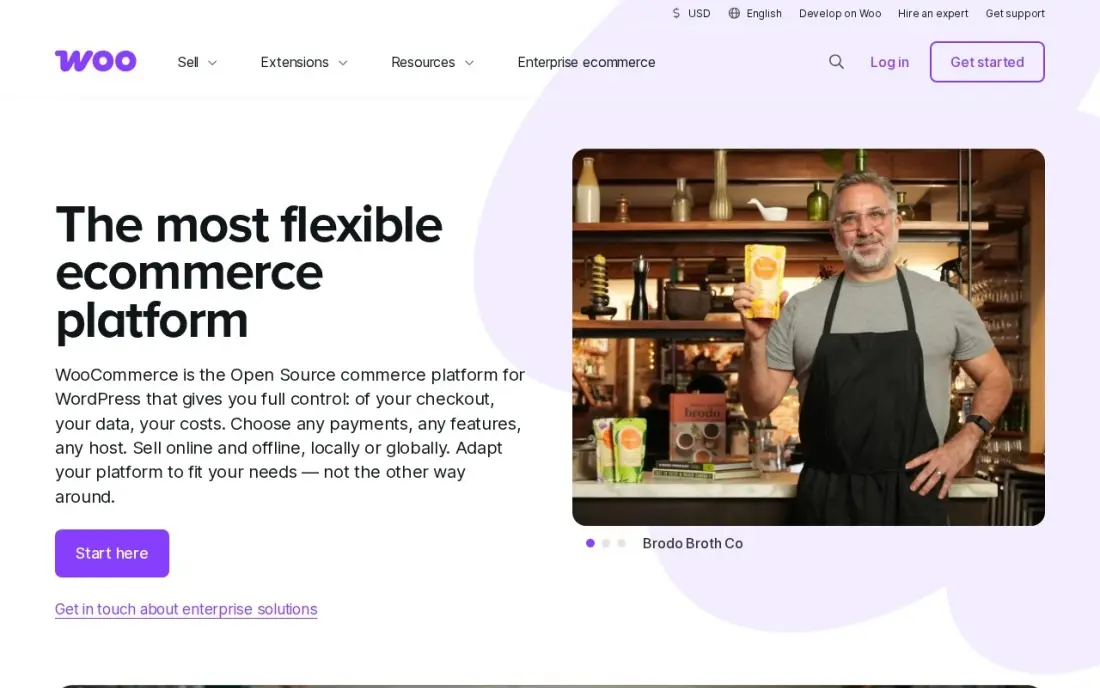
WooCommerce scales well for a medium business that already runs WordPress and has development support. The plugin is free, takes no share of revenue at any sales level, and gives complete control of design, checkout and data. With more than 7 million installations, there is an extension or integration for most back-office systems.
Its costs grow with traffic rather than sales. Hosting runs $25 to $350 a month on WooCommerce's estimate, extensions cost $29 to $299 a year each, and the business owns updates, security and uptime. Budget a monthly retainer with a developer from day one.
What we like
- The plugin itself is free and open source, with no licence fee and 0% revenue share
- More than 7 million active installations, so almost every ecommerce tool already integrates with it
- Full control over design, checkout and customer data, with no platform branding anywhere
- Subscriptions, bundles and memberships are available through extensions
Watch out for
- Hosting, security and updates are the owner's job, not the platform's
- The real cost is hosting at $25-$350 a month plus paid extensions at $29-$299 a year each
- No hosted support team to call when checkout breaks at midnight

Lightspeed Retail
Best for: Mid-size retailers with several shops that need one system for POS, stock and online sales
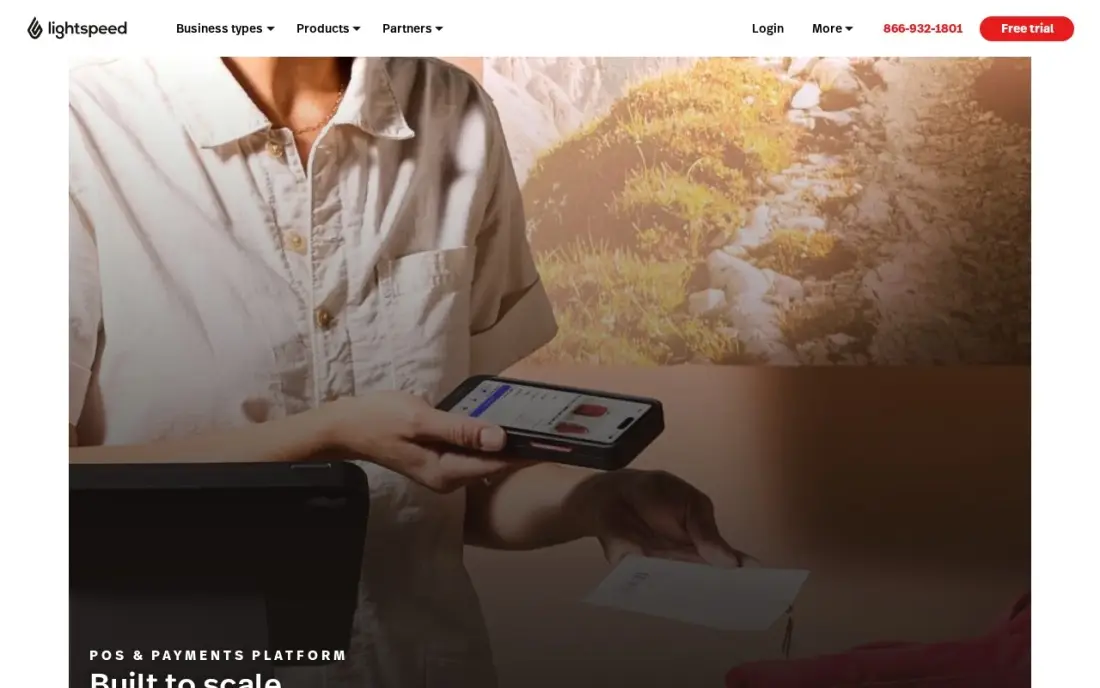
Lightspeed Retail is the right fit when a medium business is mostly physical retail with an online store alongside. It handles multi-variant products, bundles, stock transfers between locations and large CSV imports, and Basic includes POS, payments, purchase orders and a basic online store for $89 a month billed annually, or $109 billed monthly.
Multi-location costs add up. Extra registers cost $59 a month each, forecasting, custom reporting and API access wait for Plus at $289 a month, and processing runs through Lightspeed Payments at 2.6% + 10c. The online store is simpler than Shopify's, so web-first businesses should look elsewhere.
What we like
- Basic covers POS, payments, core inventory, purchase orders and a basic online store from $89/month billed annually
- Core ($149/month) adds loyalty, advanced reporting, accounting integrations and a mobile scanner app
- Handles multi-variant products, bundles, stock transfers and up to 10,000-item CSV imports
Watch out for
- Basic at $89/month billed annually covers 1 register and 1 location; extra registers are $59/month each
- Card processing runs through Lightspeed Payments at 2.6% + 10c on every plan, with no cheaper processor option on the page
- The features serious stockrooms need — forecasting, custom reporting, API access — sit on Plus ($289/month)

Adobe Commerce
Best for: Upper-mid-size businesses with complex catalogs, B2B accounts and an in-house development team
Adobe Commerce is for the medium business that has outgrown hosted platforms: complex pricing rules, B2B company accounts with quotes and approvals, several storefronts or a catalog that needs custom product types. It handles very large catalogs and high traffic, and gives full control of URLs, metadata and structured data.
The jump in cost is steep. Adobe publishes no list price, third-party estimates put licences well into five figures a year, and routine changes need developers. Most medium businesses are better served by BigCommerce or Shopify; pick Adobe only for requirements those platforms cannot meet.
What we like
- Deep customization: custom product types, pricing logic, checkout flows and B2B workflows like quotes and approvals
- Handles very large catalogs and high traffic, with company accounts, shared catalogs and personalized pricing built in
- Full control of URLs, metadata and schema, with no platform-imposed structure
Watch out for
- No published price — you need a sales consultation, and third-party estimates put licences well into five figures a year before hosting and development
- Needs developers for setup and ongoing maintenance; routine changes are slower and more expensive than on a hosted platform

Wix
Best for: Service-led medium businesses that sell products alongside bookings, content and events
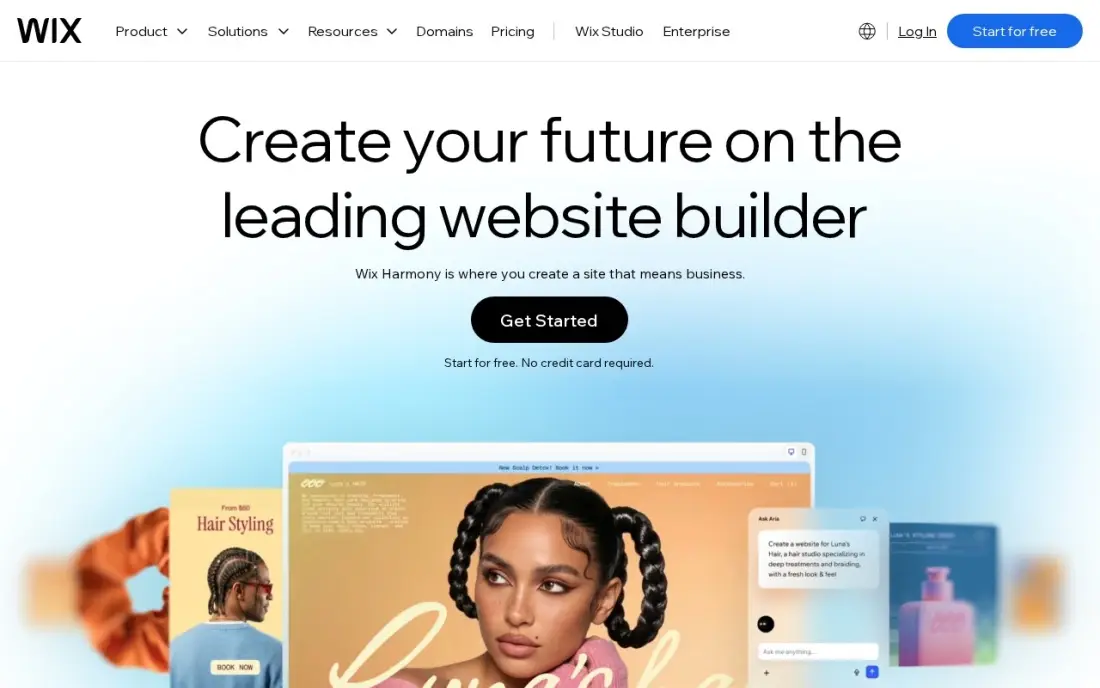
Wix suits a medium business where the store is one part of a wider website: a training company selling kits and courses, a studio selling products and classes, or a brand with a busy blog. Bookings, blogging and marketing sit in one dashboard, and Core takes payments with no platform fee through Wix Payments at 2.9% + 30c a card sale.
Check the caps. Core costs $36 a month or $29 billed annually, but allows 50 GB of storage and five collaborators, so a larger team needs a higher plan. It is a strong site builder with a store, not a high-volume commerce engine.
What we like
- Core takes payments with 0% platform fee through Wix Payments, at 2.9% + 30c a card sale
- Bookings, a blog and marketing tools sit in the same dashboard as the store
- Hundreds of templates and an app market, with no code needed to launch
- A free plan exists for the website, so the brand can build before it pays
Watch out for
- Light at $17 a month billed annually cannot take payments, so selling starts at Core
- Core's 50 GB of storage and 5 collaborators cap a growing catalog and team
- Wix runs 50%-off first-year promotions often, so the renewal price is the honest one to budget

PrestaShop
Best for: International medium businesses with technical staff that want free, open-source software
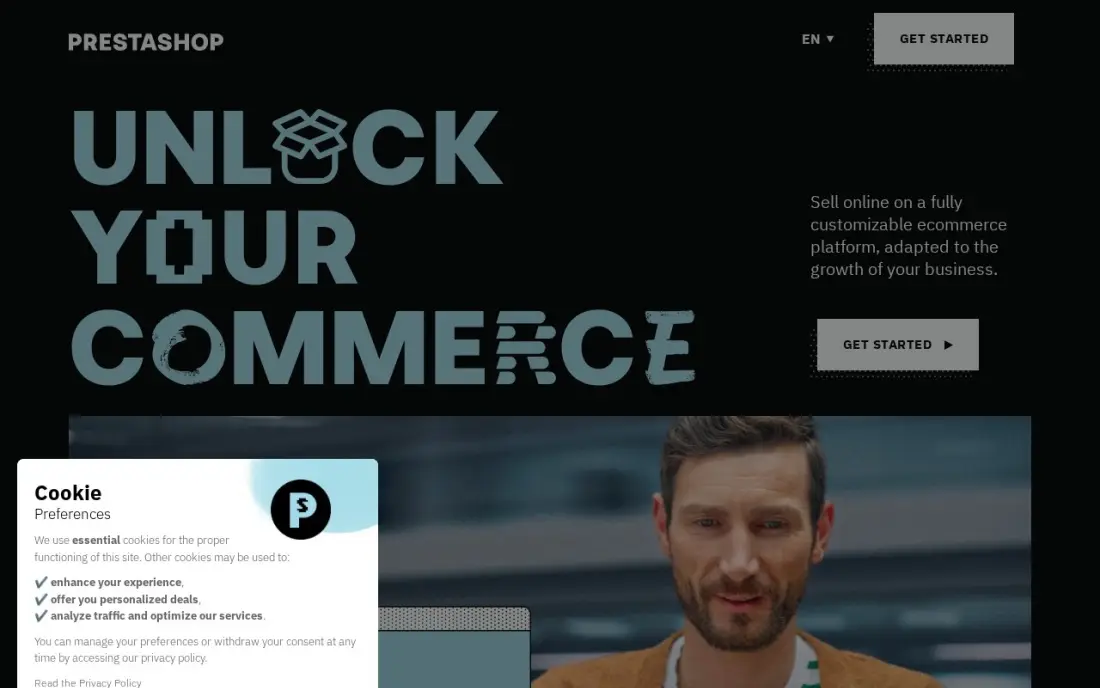
PrestaShop is a good fit for a medium business selling across several countries. The Classic software is free, takes no commission and includes multilingual and multi-currency selling and strong catalog tools, which saves the add-ons a hosted platform would charge for. More than 4,000 modules and themes extend it.
You own the infrastructure: hosting, security, updates and performance. Paid modules add up, and support is community-led unless you buy a plan; the hosted plan starts at €24 a month excluding tax. It suits a business with an in-house developer or a long-term agency partner.
What we like
- Free open-source software with no subscription fees and no commission on sales — you own the store and the data
- Strong native SEO and catalog tools, with multilingual and multi-currency selling built in for international stores
- More than 4,000 modules and themes in the Addons Marketplace for extending the store
Watch out for
- You handle hosting, security, updates and performance yourself, or pay an expert — support is community-led unless you buy a plan
- Advanced modules and themes are paid, so a production store often costs more than the free download suggests

Medusa
Best for: Medium businesses with developers that want an open-source commerce backend with no lock-in
Medusa is the modern open-source route for a medium business with its own developers. Products, orders, pricing and carts are code modules the team can extend, the storefront is custom, and data can be exported to run Medusa on your own infrastructure. Medusa Cloud removes the hosting work, from $29 a month.
A production store realistically needs Launch at $99 a month for custom domains, autoscaling and backups, or Scale at $299 for background workers and priority support. Usage beyond plan allowances is billed on top. It fits a business that sees its store as software it builds, not a theme it configures.
What we like
- Open-source codebase with no lock-in: you can export your data and run Medusa on your own infrastructure
- Develop at $29 a month gives a hosted backend, a preview environment and 600 compute hours with no servers to manage
- Launch at $99 a month adds autoscaling, custom storefront domains, automatic backups and webhooks
Watch out for
- Develop has no custom domains, autoscaling or backups, so a live store realistically starts on Launch at $99 a month
- It is a commerce backend, so the storefront and most of the customer-facing build are developer work
- Usage past plan allowances is billed on top, including extra cloud seats at $30 a month each
The best ecommerce platform for medium business has to carry a team, a growing catalog and several systems around it without turning every new need into another app subscription. We compared eight platforms — hosted store platforms, a multi-location retail system, open-source software and an enterprise option — and every price below comes from the vendor's own pricing page as checked in November 2026.
How to choose the best ecommerce platform for medium business
- Count staff accounts. A medium business has marketing, service and warehouse staff who all need logins. Shopify Basic gives one; BigCommerce gives unlimited on every plan.
- Model next year's sales, not this year's. Plans that step up with revenue can move you to a higher tier mid-year. Budget for the tier you will be on in twelve months.
- List every integration. Accounting, ERP or inventory, email, shipping and support tools all need to connect. Check the connector exists for your exact system.
- Price apps as part of the platform. A store that needs eight apps at $20 to $50 each is paying more for apps than for the platform.
- Decide who maintains it. Hosted platforms handle uptime and security; open-source ones need a developer on retainer.
- Check multi-location and multi-channel needs. Shops, marketplaces and social channels all need one stock count.
A medium business usually has enough pages that technical SEO problems start to cost real traffic. Our monthly SEO service handles that ongoing work, and the free XML sitemap generator helps when a platform's default sitemap leaves pages out.
Ecommerce platforms for medium business pricing: what you will actually pay
Take a business with six staff who need logins and online sales of about $1 million a year. On Shopify, six staff accounts rule out Basic, so the starting point is Grow at $105 a month, or $1,260 a year, before apps. BigCommerce gives six logins on any plan, but at $1 million a year the store is far past Core's $30,000 sales limit, so it will sit on a higher tier; get the exact tier price for your revenue before comparing.
A retailer with three shops and a website might choose Lightspeed Retail instead. Basic costs $89 a month billed annually, or $1,068 a year, for one register and one location, and every extra register adds $59 a month, so get a written quote for all three shops before comparing.
Open source shifts the cost from licence to labour. WooCommerce and PrestaShop are free to download, but a medium business should budget for solid hosting — WooCommerce estimates $25 to $350 a month — plus extensions and a developer retainer. Medusa Cloud Scale costs $299 a month, or $3,588 a year, before usage. Adobe Commerce publishes no price.
Know the difference: hosted vs open-source ecommerce
A hosted platform — BigCommerce, Shopify, Wix or Lightspeed — runs the servers, security, updates and checkout for you. You pay a monthly subscription that rises with plan tier or sales, and you accept the platform's rules about what can be changed. For most medium businesses, not having to think about uptime on a sale weekend is worth that.
Open-source software — WooCommerce, PrestaShop, Medusa or Magento Open Source — gives you the code. There is no platform fee and no lock-in, and a developer can change anything. In exchange, you own every outage, security patch and performance problem. It is the better choice only when the business has the technical staff to run it and requirements a hosted platform cannot meet.
Quick comparison: tool type by need
| Buyer | Best pick | Why |
|---|---|---|
| Most medium businesses | BigCommerce | Unlimited staff and products on every plan |
| Multi-channel sellers | Shopify | Largest app ecosystem, Grow $105/month for a team |
| WordPress businesses | WooCommerce | Free plugin, 0% revenue share at any size |
| Retailers with several shops | Lightspeed Retail | POS, stock and web store, $89/month billed annually |
| Complex catalogs and B2B | Adobe Commerce | Deep customization, quote-only licence |
| Service-led businesses | Wix | Store, bookings and blog in one, Core $36/month |
| International sellers | PrestaShop | Free, multilingual and multi-currency built in |
| In-house developer teams | Medusa | Open source, Cloud from $29/month |
Mistakes to avoid
- Choosing on the entry price. A medium business almost never stays on the cheapest plan. Compare the tier your team size and sales actually require.
- Letting apps sprawl. Each app is a monthly fee, a login and a possible conflict. Review the app list every quarter and cancel what is unused.
- Migrating without a redirect plan. Moving platforms without mapping old URLs to new ones can wipe out years of search traffic. Plan redirects before launch.
- Ignoring staff permissions. Giving everyone owner access is a security risk. Choose a plan with proper staff roles.
- Underestimating integration work. Connecting an ERP or warehouse system often takes longer than building the store. Put it in the project plan from the start.
How we chose
We checked each vendor's own pricing page in November 2026 and recorded the starting price exactly as shown, including annual-billing figures where the page lists one. We compared staff accounts, sales thresholds, integration options and maintenance burden, and ranked platforms by fit for the most common buyer: a business with a small team and seven-figure online sales that has outgrown a starter store. Adobe Commerce publishes no price, so we list it as custom quote. Ratings come from G2 pages where we checked them, on the dates shown in the sources. No vendor paid for a place in this list, and none of the links here are affiliate links.
What to do next
Write down how many staff need logins, your expected online sales for next year and the systems the store must connect to. Those three facts rule out most options and leave a shortlist of two. If you are moving platforms, book a free migration SEO check before you switch, so search traffic moves with you.
Frequently asked questions
What is the best ecommerce platform for a medium business?
BigCommerce is the best fit for most medium businesses because every plan includes unlimited staff accounts and products. Shopify is the alternative for its app ecosystem, starting realistically on Grow at $105 a month for a team.
How much does ecommerce cost for a medium-sized business?
Entry prices are low — BigCommerce Core and Shopify Basic cost $39 a month, or $29 billed annually — but a medium business usually needs a higher tier, apps and integrations. Shopify Grow costs $105 a month, and Lightspeed Retail Basic costs $89 a month billed annually for one register and one location.
When should a medium business move to an enterprise platform?
When requirements such as B2B account hierarchies, several storefronts or custom pricing logic cannot be met on BigCommerce or Shopify. Adobe Commerce and similar platforms publish no price and need developers, so move only when the hosted platforms genuinely fail.
Is Shopify or BigCommerce better for a medium business?
BigCommerce includes unlimited staff accounts and more features on every plan, while its plans step up with sales. Shopify has the larger app ecosystem and stronger multi-channel selling, but Basic has one staff account, so a team needs Grow at $105 a month.
Should a medium business use open-source ecommerce?
Only with development support. WooCommerce, PrestaShop and Medusa avoid platform fees and lock-in, but the business owns hosting, security and updates, which needs a developer or agency on retainer.
What integrations does a medium ecommerce business need?
Usually accounting, inventory or ERP, email marketing, shipping and customer service. Confirm each connector exists for your exact systems before choosing a platform, and price any paid apps.
Sources we checked (14)
- BigCommerce — www.bigcommerce.com/pricing (checked November 12, 2026)
- Shopify — shopify.com/pricing (checked November 12, 2026)
- Shopify reviews on G2 (checked November 12, 2026)
- WooCommerce — woocommerce.com/pricing (checked November 12, 2026)
- WooCommerce reviews on G2 (checked November 12, 2026)
- Lightspeed Retail — www.lightspeedhq.com/pricing (checked November 10, 2026)
- Lightspeed Retail reviews on G2 (checked November 10, 2026)
- Adobe Commerce — business.adobe.com/products/magento/magento-commerce.html (checked November 1, 2026)
- Adobe Commerce reviews on G2 (checked November 1, 2026)
- Wix — www.wix.com/plans (checked November 12, 2026)
- Wix reviews on G2 (checked November 12, 2026)
- PrestaShop — prestashop.com/start (checked November 1, 2026)
- PrestaShop reviews on G2 (checked November 1, 2026)
- Medusa — www.medusajs.com/pricing (checked November 16, 2026)
Make one of these tools?
We re-check this list every quarter. Send a correction, request a review, or ask about a clearly labeled sponsored spot.
Request a listingShamim
Founder of SerpAstra
A full-stack SEO and digital marketer who spends most days on Local SEO for dental practices, AI search visibility and lead generation.
Free SEO and AI visibility audit
Find out what is holding your rankings back
Send us your site. Within 2 business days you get a written audit, an AI visibility check and a short fix list ranked by impact. Free, with no contract attached.
Request my free audit→Related buying guides
 Ecommerce7 Best Enterprise Ecommerce Platforms in 2026, ComparedCompare the best enterprise ecommerce platform options on B2B tools, multi-store control, GMV fees and annual cost, with every price checked on vendor pages.Read guide →
 Ecommerce7 Best Ecommerce Platforms for SEO in 2026 (Pros, Cons and Pricing)The 7 best ecommerce platform for SEO picks compared on price, SEO controls and ease of use, with real 2026 prices checked on each vendor's pricing page.Read guide →
 Logistics, Supply Chain & Procurement10 Best Inventory Management Software Small Business in 2026, Compared10 best inventory management software small business picks compared with real 2026 prices, free plans and order limits, so you can choose by volume.Read guide →