10 Best Digital Platforms to Improve Customer Journey in 2026, Compared
Compare the 10 best digital platform to improve customer journey options on price, free plans and journey features, with prices verified in November 2026.
 Shamim Mia, Founder, SerpAstraLast verified November 12, 202612 min read
We compare pricing pages, documentation and public reviews. We never accept payment for rankings.

Key takeaways
- HubSpot leads for most teams at $20 a seat a month, with Intercom from $29 and Freshdesk from $19 — all three cover the core journey from first contact to repeat purchase.
- The single most important buying factor is the pricing unit: per-seat, per-agent, per-contact and per-event pricing turn a cheap solo plan into a dear team plan.
- Three tools start at $0 — Amplitude, Pendo and HubSpot's free plan — but journey orchestration, the feature that automates multi-step journeys, usually needs a paid tier or a quote.
- Prices below come from the vendors' own pricing pages, verified in November 2026; where a vendor publishes no price, the card says custom quote. Ratings are G2, with review counts shown.
On this page
Quick comparison
| Tool | Best for | Starting price | Free plan |
|---|---|---|---|
| HubSpot | Small and mid-size teams that want CRM, marketing and support on one record | $20/seat/mo | Yes (free plan) |
| Intercom | Product-led SaaS teams that want AI-first messaging and support in one inbox | $29/seat/mo (annual) | No (14-day trial) |
| Freshdesk | Small and mid-market teams that want multichannel ticketing live fast | $19/agent/mo (annual) | No (6-month program) |
| Zendesk | Mid-size teams running omnichannel support across email, chat, voice and social | $55/agent/mo (annual) | No (14-day trial) |
| ActiveCampaign | Small businesses that want journey automation and a CRM for the lowest flat price | $15/mo (annual) | No (14-day trial) |
| Salesforce Marketing Cloud | Enterprise marketing teams running journeys across email, mobile and ads at scale | $25/user/mo | No (demo only) |
| Amplitude | Product and growth teams that need to see where customers drop off | Free; Plus from $0 | Yes (free plan) |
| Pendo | SaaS teams that want to guide users inside the product itself | Free; paid custom | Yes (free plan) |
| Braze | B2C brands running cross-channel lifecycle journeys at scale | Custom quote | No (14-day trial) |
| Qualtrics | Large organizations running research-grade experience programs | Custom quote | No (30-day trial) |
Make one of these tools?
We re-check this list every quarter. Send a correction, request a review, or ask about a clearly labeled sponsored spot.
Request a listingThe best digital platform to improve customer journey

HubSpot
Best for: Small and mid-size teams that want CRM, marketing and support on one record
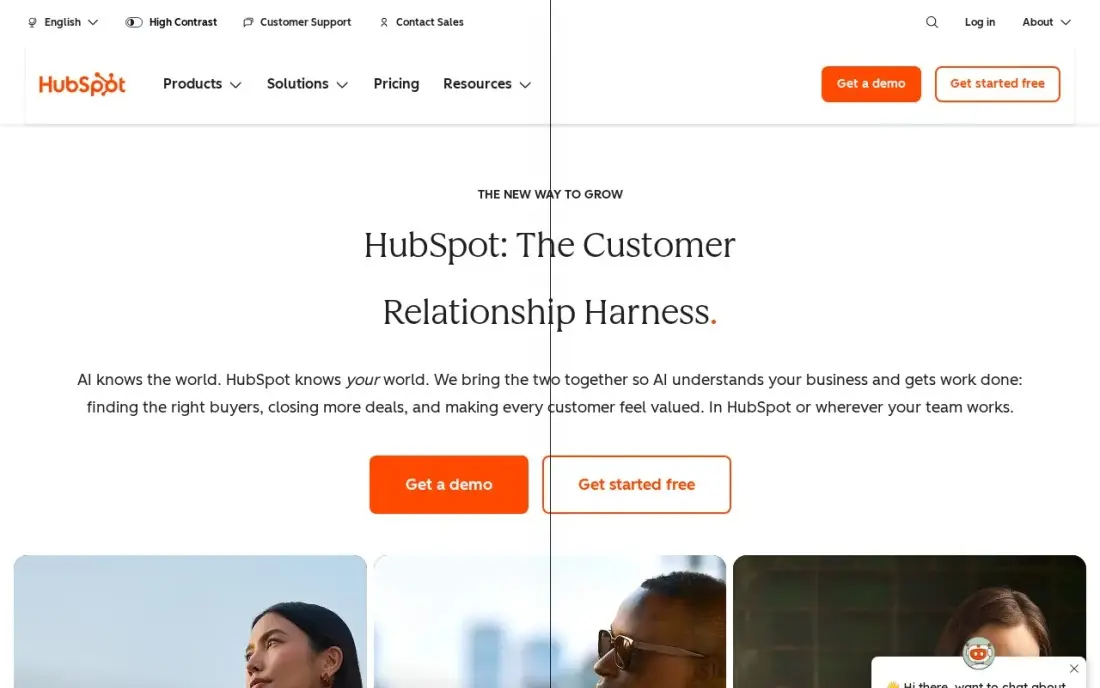
HubSpot is the most complete starting point because Service Hub sits on the same CRM as the marketing and sales tools: a customer's emails, tickets, purchases and chat history live on one record, so the journey from first click to repeat purchase is visible in one place. Starter costs $20 a seat a month, with a $7-a-month promo for new customers on annual billing, and the free plan covers up to two users.
The catch is the step up. Starter covers ticketing, a shared inbox and a knowledge base, but the real help desk — SLAs, the customer portal and the AI customer agent — needs Professional at $90 a seat a month, plus a $1,500 onboarding fee. Buy HubSpot when the team wants one CRM for the whole journey; buy a dedicated help desk when support is the job.
What we like
- One CRM record holds marketing, sales and support history, so the whole journey is visible without stitching tools together
- Free plan covers up to two users with CRM and free service tools — the only free start among the CRM-led tools here
- Starter removes HubSpot branding and includes 500 HubSpot Credits a month
- Ticketing, shared inbox, knowledge base and calling included from the Starter plan
Watch out for
- The real help desk — SLAs, the customer portal and the AI customer agent — needs Professional at $90 a seat a month
- Professional and Enterprise carry one-time onboarding fees of $1,500 and $3,500
- Seat prices multiply fast: five agents on Professional cost $450 a month before credits and add-ons

Intercom
Best for: Product-led SaaS teams that want AI-first messaging and support in one inbox
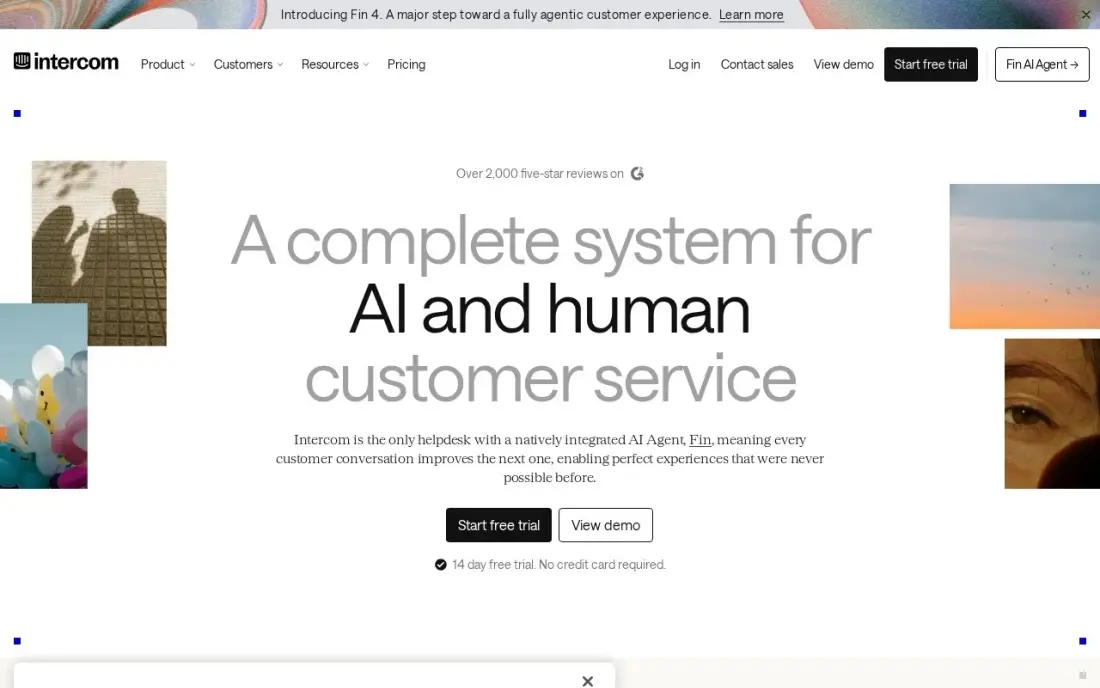
Intercom is the AI-first pick in this list: Fin, its AI agent, answers routine questions inside the same Messenger, shared inbox and help center where agents work, and it comes included on every plan rather than as a higher-tier extra. Essential costs $29 a seat a month on annual billing, or $39 month to month.
The bill has two meters, and only one is the seat price. Fin costs $0.99 per resolved outcome on top of seats, with a 50-outcome monthly minimum, so a busy inbox adds a usage line every month. There is no free plan, only a 14-day trial, and Copilot, the agent-facing assistant, is another $29 a seat a month. Pick Intercom when in-app messaging and AI resolution are the journey; pick Freshdesk when the budget is fixed and email is the main channel.
What we like
- Fin AI Agent is included on every plan and resolves routine questions inside Messenger, the inbox and the help center
- The most polished messenger in this category, with in-app chat, email, SMS, WhatsApp and social in one inbox
- Workflow automation, round-robin assignment and a multilingual help center from Advanced
Watch out for
- Fin costs $0.99 per resolved outcome on top of seats, with a 50-outcome monthly minimum
- No free plan — only a 14-day trial — and Copilot is another $29 a seat a month
- Salesforce completed its acquisition of the company, now called Fin, in September 2026, so the roadmap bears watching

Freshdesk
Best for: Small and mid-market teams that want multichannel ticketing live fast
Freshdesk is the value pick among the big three help desks: Growth costs $19 an agent a month on annual billing, or $23 month to month, and it covers email ticketing, a shared inbox, a customer portal, a knowledge base and automations from day one. Setup takes an afternoon — connect the support email, add agents and answer tickets the same day.
The free plan is gone. What remains is a six-month Free Program for up to two agents, and after that every agent is paid. Freddy AI Copilot, the agent-facing assistant, costs another $29 an agent a month on Pro and Enterprise, and extra AI Agent sessions cost $49 per 100 after the one-time 500 included. Buy Freshdesk when the team wants the cheapest real help desk; buy Zendesk when the queue spans chat, voice and social at scale.
What we like
- The cheapest entry among the big three help desks at $19 an agent a month billed annually
- Growth covers email ticketing, a shared inbox, a customer portal, a knowledge base and automations from day one
- 500 Freddy AI Agent sessions included once per account, with AI answers on the entry plan
Watch out for
- No free plan anymore — only a six-month Free Program for up to two agents
- Freddy AI Copilot costs $29 an agent a month on Pro and Enterprise, and extra AI sessions cost $49 per 100
- Omnichannel messaging and chat sit on Freshdesk Omni, a separate, pricier product line

Zendesk
Best for: Mid-size teams running omnichannel support across email, chat, voice and social
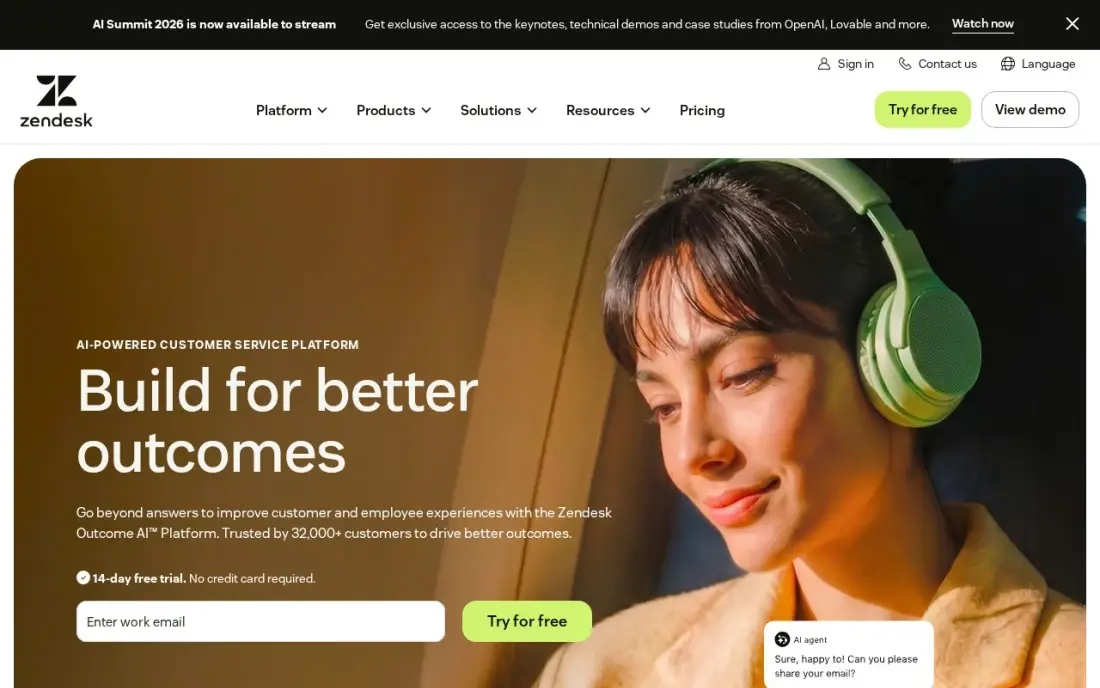
Zendesk is the incumbent in this list, and its strength is breadth: Suite Team pulls email, chat, messaging, voice and social into one agent workspace, with a help center and AI agents included, for $55 an agent a month on annual billing or $69 month to month. No other tool here covers as many channels in a single plan.
Two numbers matter before buying. The $19 Support Team plan is ticketing only — chat, the help center and AI agents start on Suite Team — and AI resolutions beyond the included five per agent a month cost $1.50 each on a committed volume or $2.00 pay-as-you-go. Copilot, the agent assistant, is another $50 an agent a month on Suite Professional and above. Pick Zendesk when the queue is genuinely omnichannel; pick Freshdesk when email carries the load.
What we like
- The broadest channel coverage here: email, chat, messaging, voice and social in one agent workspace
- AI agents included on Suite Team, with five automated resolutions per agent a month
- The largest review base in this list — over 7,000 G2 reviews — and the deepest integration catalog
Watch out for
- The $19 Support Team plan is ticketing only; chat, the help center and AI agents start on Suite Team at $55
- AI resolutions beyond the allowance cost $1.50 each committed or $2.00 pay-as-you-go
- Copilot costs $50 an agent a month and only on Suite Professional and above

ActiveCampaign
Best for: Small businesses that want journey automation and a CRM for the lowest flat price
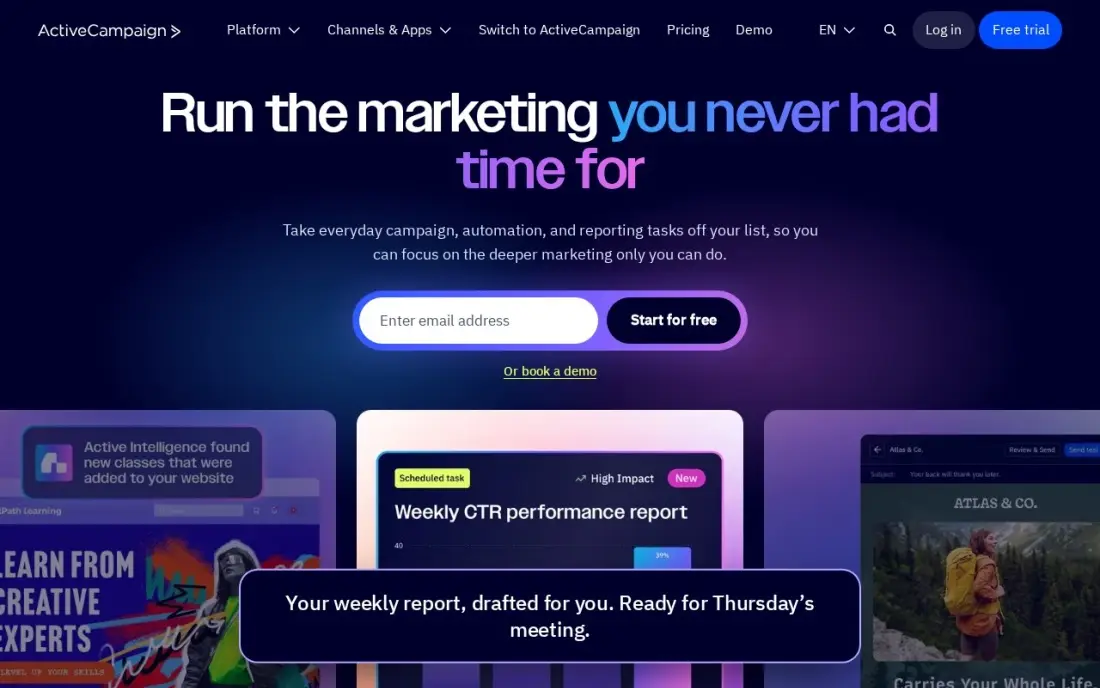
ActiveCampaign is the cheapest way to automate a journey in this list: Starter costs $15 a month on annual billing for 1,000 contacts, or $19 month to month, and it includes email campaigns, signup forms and multi-step automations with a built-in CRM. No other tool here runs a welcome series, an abandoned-cart flow and a win-back campaign for $15.
The price follows the contact list, not the team. Starter jumps from $15 a month at 1,000 contacts to $149 at 10,000, and each automation is capped at five actions, so a branching welcome series needs Plus at $49. There is no free plan, only a 14-day trial, and the AI add-on, SMS credits and extra users stack on top. Buy ActiveCampaign when the journey is mostly email; buy HubSpot when sales and support must share the same record.
What we like
- The cheapest journey automation here: a welcome series, abandoned-cart flow and win-back campaign for $15 a month
- A built-in CRM on every plan, with 950+ ready-made automation recipes, per ActiveCampaign's pricing page
- Send allowance of 10 times the contact limit on Starter and Plus
Watch out for
- The price follows the contact list: Starter rises from $15 at 1,000 contacts to $149 at 10,000
- Each automation is capped at five actions on Starter, so branching flows need Plus at $49
- No free plan — only a 14-day trial — and AI, SMS and extra users are paid add-ons

Salesforce Marketing Cloud
Best for: Enterprise marketing teams running journeys across email, mobile and ads at scale
Salesforce Marketing Cloud is the enterprise journey engine in this list: Journey Builder maps multi-step, cross-channel journeys, and the platform is built to run them at a volume the smaller tools cannot reach. The pricing page lists Salesforce Starter at $25 a user a month, which buys a CRM suite with email marketing and campaign analytics.
Read the entry price carefully. Starter has no journey orchestration, no segment creation and no Agentforce campaigns — the journey features start on Marketing Cloud Next Growth at $1,500 an organization a month, billed annually, and Advanced is $3,250. G2 rates it 4.1 out of 5, the lowest score here, with reviewers citing a steep learning curve. Buy Salesforce when the journey spans millions of contacts; buy ActiveCampaign or HubSpot when it spans thousands.
What we like
- The only platform here built for journeys across millions of contacts and multiple business units
- Journey Builder maps multi-step, cross-channel journeys with Agentforce AI on Growth and above
- Deepest CRM in the list, with Data 360 unifying customer data across the business
Watch out for
- Starter at $25 has no journey orchestration, no segment creation and no Agentforce — journeys start at Growth, $1,500 an organization a month
- Lowest G2 score here at 4.1 out of 5, with reviewers citing a steep learning curve and clumsy setup
- Transaction fees apply on top of the seat price, and implementation usually needs a partner

Amplitude
Best for: Product and growth teams that need to see where customers drop off
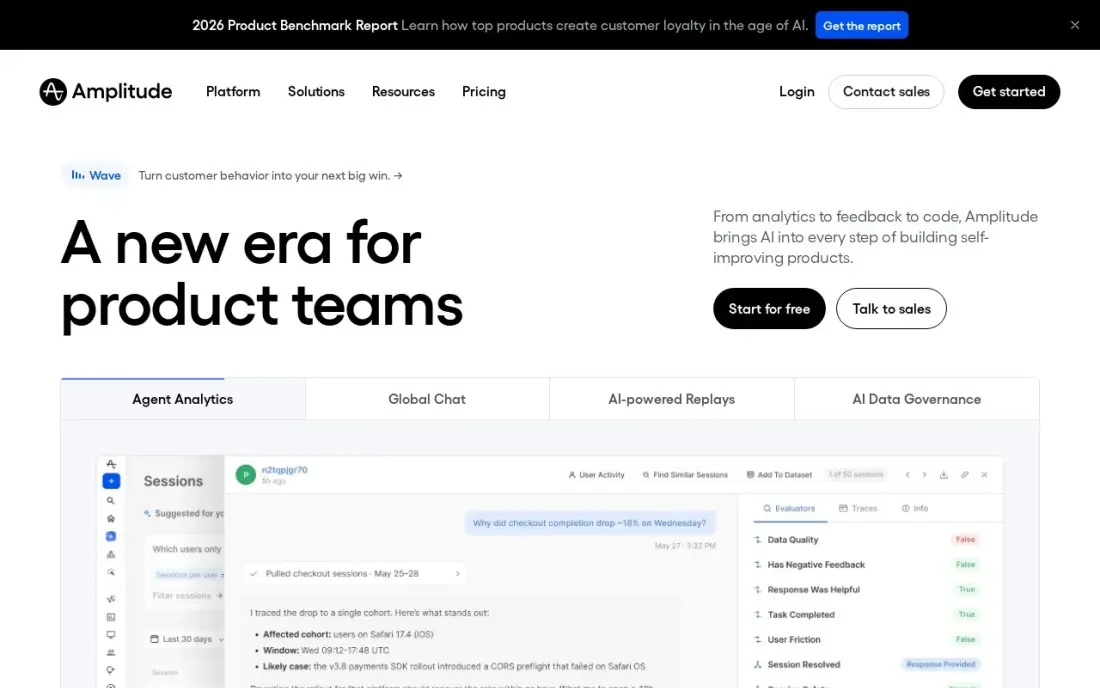
Amplitude is the analytics pick in this list: it shows what customers actually do, event by event, so a team can find where the journey breaks instead of guessing. Plus starts at $0, with the first 2 million events a month free, and the free plan covers the same 2 million events with no time limit and no credit card.
The price is a slider, not a tier. Past 2 million events a month, Plus costs $75 a month billed annually at 3 million events and $576 at 10 million, so a growing product should price its real event volume before committing. Growth and Enterprise are custom-quoted, and going over the free cap three times locks the account. Buy Amplitude when the question is where the journey breaks; buy a CRM when the question is who to contact next.
What we like
- The deepest journey analytics here: funnels, cohorts and retention show exactly where customers drop off
- Free plan covers 2 million events a month with no time limit and no credit card
- Plus adds custom events and formulas, 20 behavioral cohorts, alerts and heatmaps
Watch out for
- Pricing is a usage slider: $75 a month at 3 million events, $576 at 10 million, billed annually
- Going over the free cap three times locks the account, with deletion six months later if you do not upgrade
- Analytics only — it shows where the journey breaks but cannot message the customer

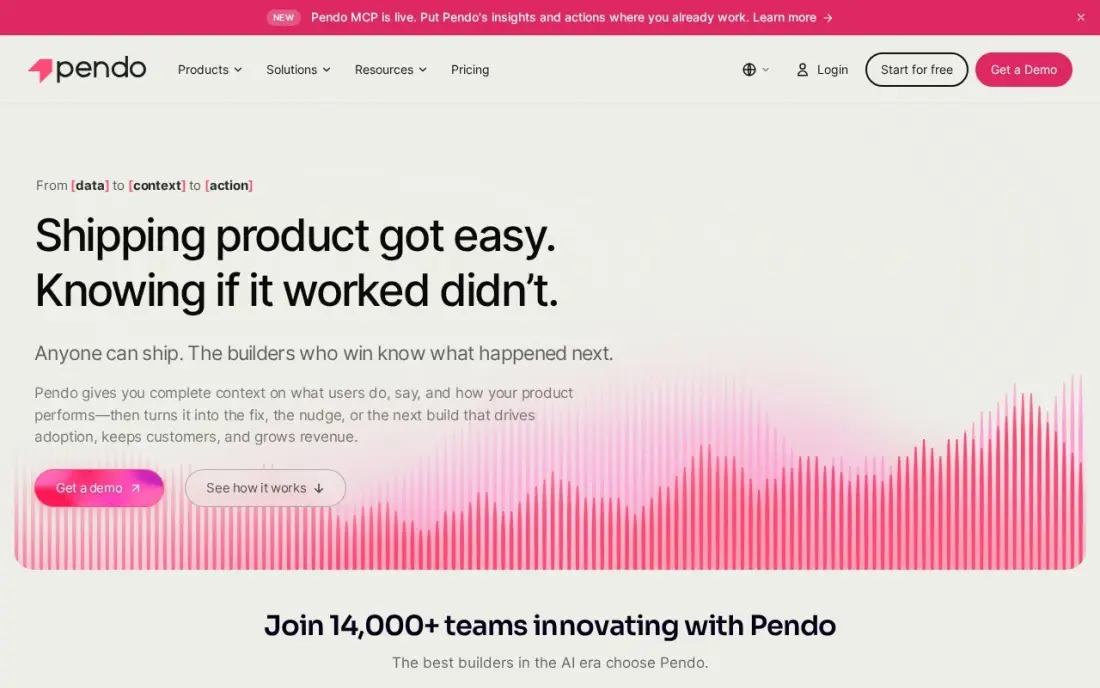
Pendo improves the journey inside the product rather than in the inbox: product analytics show where users stall, in-app guides walk them past it, and NPS and CSAT surveys ask how the experience felt — all without writing code. The free plan covers up to 500 monthly active users at $0, with analytics, guides and Pendo-branded surveys included.
Every paid tier is a custom quote, priced on monthly active users and the feature tier, so there is no number to budget against before the sales call. Session replay waits for Core and sentiment surveys for the top tier, and reviewers cite a steeper learning curve than smaller tools. Buy Pendo when the product is the journey; buy Intercom or Zendesk when the journey happens in support conversations.
What we like
- The only tool here that guides users inside the product itself, with no code: analytics, in-app guides and surveys in one place
- Free plan covers up to 500 monthly active users with analytics, guides and Pendo-branded NPS surveys
- Retroactive analytics — install the snippet and see past user behavior immediately
Watch out for
- Every paid tier is a custom quote, so there is no published number to budget against
- Session replay waits for Core and sentiment surveys for the top tier
- G2 reviewers cite a steeper learning curve and setup complexity than smaller tools

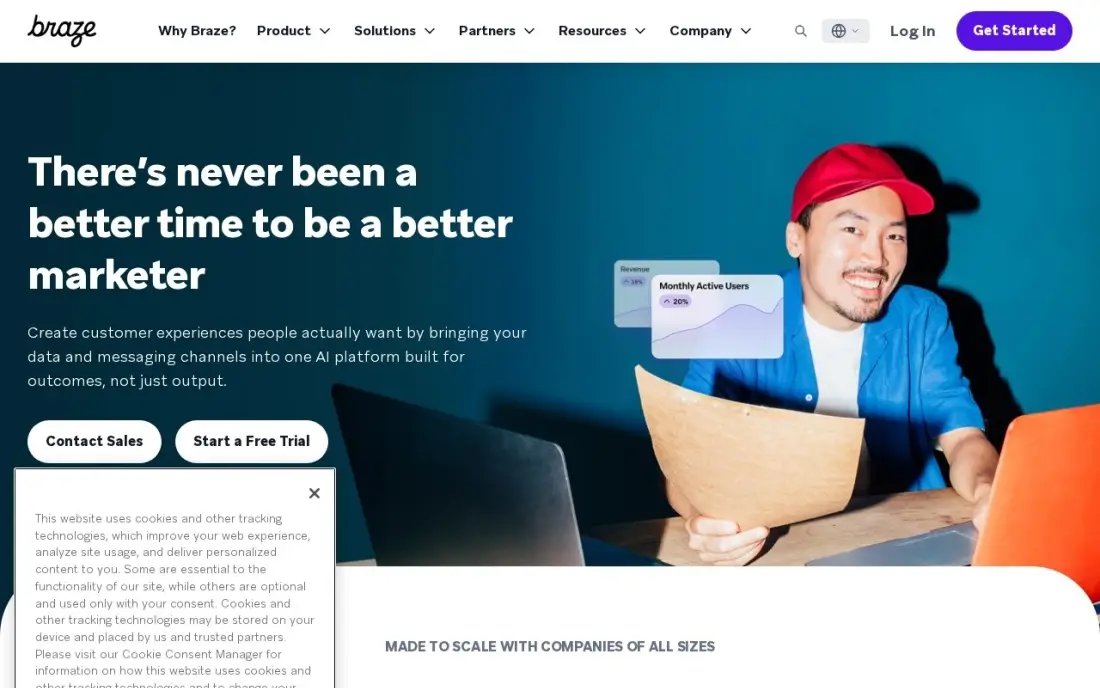
Braze is the journey-orchestration pick for consumer brands: Canvas, its visual journey builder, maps multi-step flows across email, push, SMS, in-app messages and WhatsApp, and BrazeAI personalizes each step from live customer data. Customers include Burger King, HBO Max and the NBA, and G2 reviewers praise the journey building most.
There is no published price. Braze sells four editions — Go, Select, Pro and Enterprise — all custom-quoted on monthly active users, profiles and Action Credits, and third-party estimates put entry contracts around $60,000 a year. Salesforce agreed to acquire Braze in October 2026 for about $5.66 billion, so renewal terms deserve a close read. Buy Braze when the audience is measured in hundreds of thousands; buy ActiveCampaign when it is measured in thousands.
What we like
- Canvas is the most visual journey builder here, mapping multi-step flows across email, push, SMS and in-app
- Real-time customer data and BrazeAI personalization on every message
- Proven at consumer scale — Burger King, HBO Max, Grubhub and the NBA run on it
Watch out for
- No published prices at all — every contract is a custom quote on MAU, profiles and Action Credits
- Third-party estimates put entry contracts around $60,000 a year, the highest realistic entry here
- G2 reviewers score ease of setup 7.6 out of 10 and note Canvas gets hard to navigate as journeys grow

Qualtrics
Best for: Large organizations running research-grade experience programs
Qualtrics is the feedback pick in this list: CustomerXM collects surveys, reviews and support signals across the journey, and Text iQ reads the open-text answers for the themes behind the scores. It is the enterprise standard for experience management, used by large organizations running always-on CX programs with dedicated research teams.
There is no public price for the CX platform — CustomerXM is custom-quoted, and the platform is priced and sold as an enterprise contract. A self-serve Strategic Research plan is published at $420 a month billed annually, but it covers research surveys, not the full CX platform. Buy Qualtrics when the journey needs research-grade feedback; buy Pendo or Amplitude when product usage data answers the question.
What we like
- The most complete feedback toolkit here: surveys, reviews and support signals joined across the journey
- Text iQ reads open-text answers for the themes behind the scores, not just the numbers
- The enterprise standard for experience management, with the largest research-grade feature set
Watch out for
- No published price for the CX platform — CustomerXM is custom-quoted as an enterprise contract
- Built for teams with dedicated research staff; smaller teams will underuse it
- The published $420-a-month plan covers research surveys only, not the CX platform
The best digital platform to improve customer journey is the one that covers the stage where your customers actually leak — and the 10 tools below are ranked by fit for the most common buyer, a small to mid-size US business that wants one platform from first contact to repeat purchase. Every price was verified against the vendor's own pricing page in November 2026, and every tool is actively sold.
How to choose the best digital platform to improve customer journey
- Map the leaking stage first. Discover, buy, onboard, support and renew are different jobs; the tool must cover the stage that loses customers, not the one that already works.
- Check the pricing unit before the price. Per seat, per agent, per contact, per event and per MAU all scale differently — price the team and volume you will have next year, not the one you have today.
- Check which tier holds journey orchestration. Automated multi-step flows often sit above the entry plan, so the cheapest tier may not do the job you are buying it for.
- Check the AI meter. Per-outcome, per-session and per-resolution charges stack on top of seats, and they are where the bill grows.
- Check the free-plan caps and the overage rule. A free plan that locks, caps or stops working mid-month is not a free plan.
A journey platform fixes what happens after someone arrives; it does not bring them there. If the business is not showing up when people nearby search, our local SEO service covers that side, and the journey work starts once they land.
Whatever you shortlist, try it with a real journey before you pay. Run one welcome flow end to end — signup, first message, first purchase, first support question — and check that every step fires and the data lands on one customer record. Before asking happy customers for reviews, the free Google review link generator makes a one-tap review link for the front desk.
Digital platform to improve customer journey pricing: what you will actually pay
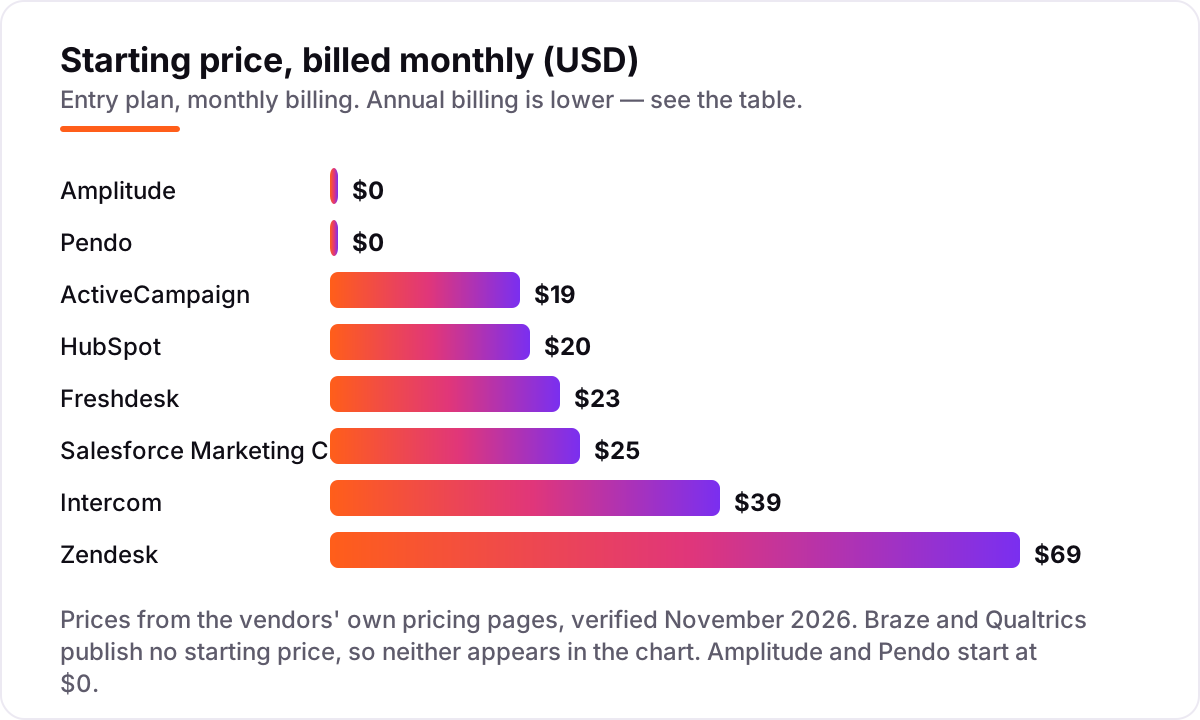
Take a five-person team with 1,000 contacts and a product that generates about 2 million events a month. On list prices, the subscription costs $0 on Amplitude Plus and Pendo Free, $15 a month on ActiveCampaign Starter, $95 on Freshdesk Growth, $100 on HubSpot Service Hub Starter, $125 on Salesforce Starter, $145 on Intercom Essential and $275 on Zendesk Suite Team, all on annual billing. Braze and Qualtrics are custom-quoted, so they have no number in this example.
Over a year on annual billing, that is $0 on Amplitude and Pendo, $180 on ActiveCampaign, $1,140 on Freshdesk, $1,200 on HubSpot, $1,500 on Salesforce Starter, $1,740 on Intercom and $3,300 on Zendesk. Monthly billing adds roughly 20%: Freshdesk rises to $115 a month, Intercom to $195 and Zendesk to $345.
Three costs sit outside every number above. First, the AI meter: Fin at $0.99 per resolved outcome, Freddy AI sessions at $49 per 100 after the included 500, and Zendesk resolutions at $1.50 each committed — a busy month adds a second line to the bill on all three. Second, the tier jump: Salesforce's journey features need Growth at $1,500 an organization a month, not the $25 Starter, and HubSpot's real help desk needs Professional at $90 a seat. Third, usage growth: Amplitude Plus costs $75 a month at 3 million events and $576 at 10 million, and ActiveCampaign Starter rises from $15 to $149 a month when the list grows from 1,000 to 10,000 contacts.
Know the difference: journey orchestration, support and analytics
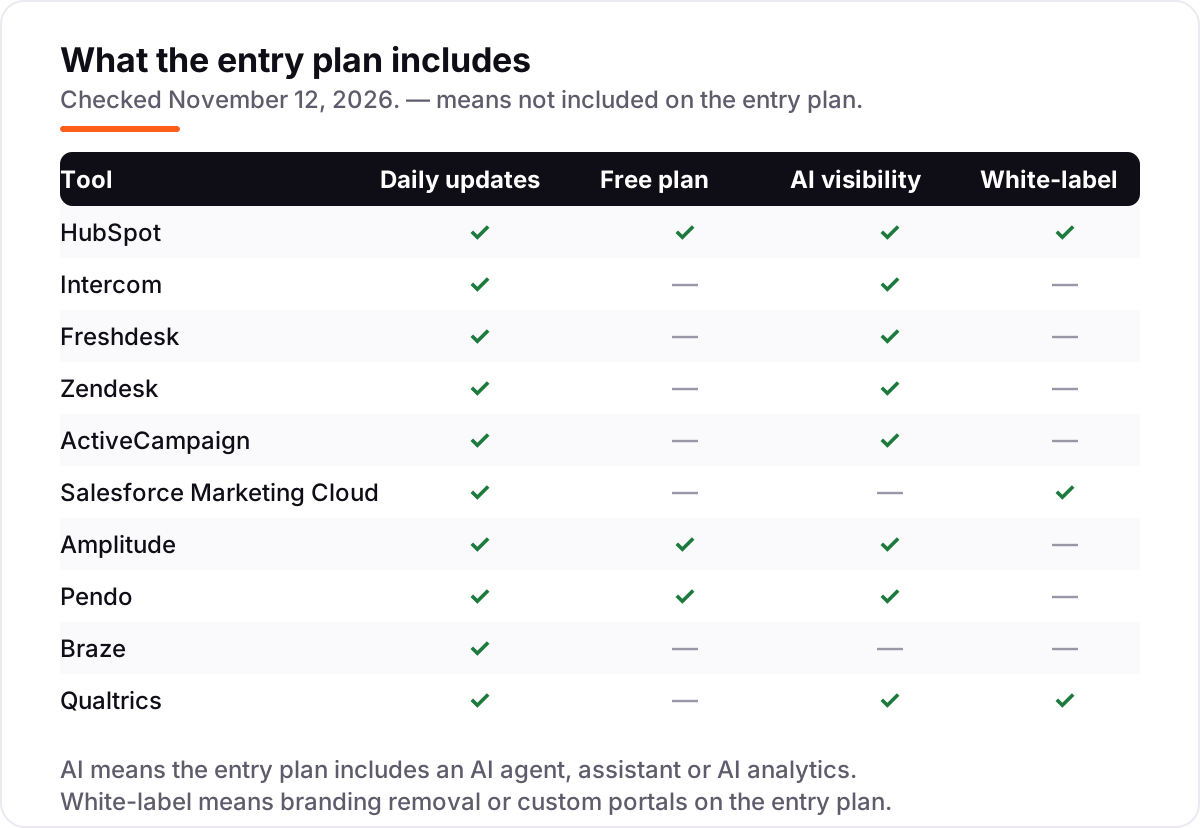
The confusion in this category is that three different jobs share one name. Journey orchestration builds and runs multi-step flows — welcome, onboarding, renewal, win-back — across channels, automatically. That is Braze Canvas, Salesforce Journey Builder and ActiveCampaign automations. Support answers questions when customers reach out: tickets, chat and a knowledge base. That is Freshdesk, Zendesk, Intercom and HubSpot Service Hub. Analytics watches what customers do and shows where they stall or drop off. That is Amplitude and Pendo, plus the feedback side of Qualtrics.
Most teams need two of the three, and the tools overlap on purpose. HubSpot and Salesforce bundle orchestration with support and a CRM; Intercom bundles support with AI messaging; Amplitude and Pendo show the breakage but cannot message the customer. Buy the job that leaks first — a team losing customers at onboarding needs orchestration, a team drowning in tickets needs support, and a team that cannot see the drop-off needs analytics — then add the second job only when the first is working.
Quick comparison: tool type by need
| Buyer | Best pick | Why |
|---|---|---|
| Small team that wants one CRM for the whole journey | HubSpot | $20/seat/month, free plan for 2 users |
| SaaS team that wants AI to answer first | Intercom | Fin included, $29/seat/month billed annually |
| Small team that wants the cheapest real help desk | Freshdesk | $19/agent/month billed annually |
| Mid-size team with chat, voice and social | Zendesk | Suite Team $55/agent/month billed annually |
| Business whose journey is mostly email | ActiveCampaign | $15/month at 1,000 contacts |
| Team that needs to see where the journey breaks | Amplitude | Free to 2 million events a month |
Mistakes to avoid
- Comparing seat prices without checking the unit. $15 a month per contact list is not $15 a seat, and $0 a month to 2 million events is not $0 forever — price the unit you will actually consume.
- Buying on the entry price when the journey feature sits a tier up. Salesforce Starter has no journey orchestration and HubSpot Starter has no real help desk; the tier that does the job costs far more than the headline.
- Forgetting the AI meter. Fin, Freddy and Zendesk AI all bill per outcome, session or resolution on top of seats, and a busy month can double the subscription.
- Paying for a suite when one job is leaking. A $55-a-seat omnichannel suite is wasteful when email carries the queue, and a help desk cannot run a multi-step journey no matter how cheap it is.
- Trusting a directory price. G2 still lists HubSpot Service Hub Starter at $15 a seat; the live pricing page says $20, with a $7 promo for new customers. Always check the vendor's own page.
How we chose
We checked each vendor's own pricing page and recorded the starting price exactly as shown, including the annual-billing figure where the page lists one, and we ranked the tools by fit for the most common buyer — a small to mid-size US business that wants one platform from first contact to repeat purchase — not by brand size. Two prices needed extra care. Direct loads of the pricing pages failed on November 12, 2026, so prices were verified against fresh indexed copies of each vendor's own pricing page, crawled November 9–12, 2026, and cross-checked against the vendors' published figures; the Braze $60,000-a-year entry figure is a third-party estimate, not a vendor price, and Braze publishes no prices at all. Ratings come from G2 pages checked November 12, 2026: HubSpot Service Hub 4.4 from 3,018 reviews, Freshdesk 4.4 from 3,761, Zendesk 4.3 from 7,032, ActiveCampaign 4.4 from 14,872, Salesforce Marketing Cloud 4.1 from 4,853, Amplitude 4.5 from 2,977 and Braze 4.5 from 1,689. Intercom, Pendo and Qualtrics show no rating because no fresh copy of their G2 pages could be verified today. No vendor paid for a place in this list, and none of the links here are affiliate links.
What to do next
Start with the leaking stage from the "How to choose" list, then take the free plan or trial of your top pick and run one real journey through it — signup to first purchase to first support question — and check that every step fires and the data lands on one record. If the journey is sorted but new customers are not finding the business, our monthly SEO service handles the visibility side. Once your tools are in place, find out what's holding your rankings back.
Frequently asked questions
What is the best digital platform to improve customer journey?
HubSpot is the best fit for most teams: CRM, marketing and support on one record from $20 a seat a month, with a free plan for up to two users. Intercom suits SaaS teams that want AI-first messaging at $29 a seat a month, and Freshdesk is the cheapest real help desk at $19 an agent a month. Enterprises should look at Salesforce Marketing Cloud or Braze instead.
How much does a customer journey platform cost?
A five-person team pays $95 to $275 a month on annual billing for the seat-priced tools here: Freshdesk Growth at $95, HubSpot Starter at $100, Intercom Essential at $145 and Zendesk Suite Team at $275. ActiveCampaign costs $15 a month at 1,000 contacts, Amplitude and Pendo start at $0, and Braze and Qualtrics are custom-quoted. AI usage and add-ons sit on top of every seat price.
Is there a free customer journey platform?
Yes, with limits. HubSpot's free plan covers up to two users, Amplitude is free to 2 million events a month, and Pendo is free to 500 monthly active users. All three are real starting points, but journey orchestration — automated multi-step flows — needs a paid plan or a quote on every tool here. Free plans are for proving the fit, not for running the journey.
What is the difference between a CRM and a customer journey platform?
A CRM stores the customer record: contacts, deals, tickets and history in one place. A customer journey platform acts on that record — it triggers the right message on the right channel at each stage, from welcome to win-back. HubSpot and Salesforce do both; Intercom, Braze and ActiveCampaign are journey-first and sit on top of, or beside, a CRM.
Do I need journey orchestration, or will a help desk do?
A help desk is enough when the problem is answering questions: tickets, chat and a knowledge base cover it. Journey orchestration is the step up — it runs multi-step, cross-channel flows automatically, like onboarding, renewal reminders and win-back campaigns. If nobody owns the gaps between stages, orchestration pays; if the queue is the problem, a help desk is cheaper.
What should I check before paying for a customer journey platform?
Check the pricing unit and price next year's team, not today's; check which tier holds journey orchestration, because it often sits above the entry plan; check the AI meter, since per-outcome and per-session charges stack on seats; and run the trial with a real journey — one welcome flow end to end — before signing.
Sources we checked (17)
- HubSpot Service Hub pricing — hubspot.com/pricing/service (pricing page, verified November 2026)
- HubSpot Service Hub on G2 — 4.4/5, 3,018 reviews (checked November 12, 2026)
- Intercom pricing — intercom.com/pricing (pricing page, verified November 2026)
- Freshdesk pricing — freshworks.com/freshdesk/pricing/ (pricing page, verified November 2026)
- Freshdesk on G2 — 4.4/5, 3,761 reviews (checked November 12, 2026)
- Zendesk pricing — zendesk.com/pricing/ (pricing page, verified November 2026)
- Zendesk on G2 — 4.3/5, 7,032 reviews (checked November 12, 2026)
- ActiveCampaign pricing — activecampaign.com/pricing (pricing page, verified November 2026)
- ActiveCampaign on G2 — 4.4/5, 14,872 reviews (checked November 12, 2026)
- Salesforce Marketing Cloud pricing — salesforce.com/marketing/pricing/ (pricing page, verified November 2026)
- Salesforce Marketing Cloud on G2 — 4.1/5, 4,853 reviews (checked November 12, 2026)
- Amplitude pricing — amplitude.com/pricing (pricing page, verified November 2026)
- Amplitude on G2 — 4.5/5, 2,977 reviews (checked November 12, 2026)
- Pendo pricing — pendo.io/pricing/ (pricing page, verified November 2026)
- Braze pricing — braze.com/pricing (pricing page, verified November 2026)
- Braze on G2 — 4.5/5, 1,689 reviews (checked November 12, 2026)
- Qualtrics pricing — qualtrics.com/pricing/ (pricing page, verified November 2026)
Make one of these tools?
We re-check this list every quarter. Send a correction, request a review, or ask about a clearly labeled sponsored spot.
Request a listingShamim
Founder of SerpAstra
A full-stack SEO and digital marketer who spends most days on Local SEO for dental practices, AI search visibility and lead generation.
Free SEO and AI visibility audit
Find out what is holding your rankings back
Send us your site. Within 2 business days you get a written audit, an AI visibility check and a short fix list ranked by impact. Free, with no contract attached.
Request my free audit→Related buying guides
 Marketing10 Best Customer Journey Analytics Software in 2026, ComparedThe 10 best customer journey analytics software picks for 2026, compared on price, journey mapping and AI insights — with real prices checked November 2, 2026.Read guide →
 Marketing10 Best Customer Analytics Software in 2026, Compared10 best customer analytics software tools compared on price, free plans and fit, from Mixpanel and Amplitude to free GA4, with prices checked November 2, 2026.Read guide →
 Sales & CRMBest Marketing CRM Software for 2026: 11 Options Compared by Use CaseCompare the 11 best marketing crm software options for 2026 on price, free plans, automation and AI features, with every price checked November 5, 2026.Read guide →