8 Best CRM Software for Ecommerce in 2026, Compared
Compare the 8 best CRM software for ecommerce on customer profiles, order data, automated flows, free plans and cost, with every price checked on vendor pages.
 Shamim Mia, Founder, SerpAstraLast verified November 2, 20268 min read
We compare pricing pages, documentation and public reviews. We never accept payment for rankings.
Key takeaways
- Klaviyo is the best ecommerce CRM for most online stores: profiles built from order data, flows on every plan and a free plan for 250 active profiles; Email starts at $20 a month.
- Omnisend is the budget pick, with email, SMS and push in one workflow from $16 a month and every feature on every plan, including the free one.
- Gorgias is the CRM for support: order history inside every ticket, from $10 a month, never priced per agent.
- HubSpot and Zoho suit stores with a sales team or wholesale accounts, with free CRMs for 2 and 3 users.
On this page
Quick comparison
| Tool | Best for | Starting price | Free plan |
|---|---|---|---|
| Klaviyo | Shopify and online stores that want customer profiles and flows built on order data | $20/mo | Yes (free plan) |
| Omnisend | Small stores that want email, SMS and push automation at a low entry price | $16/mo | Yes (250 contacts) |
| Gorgias | Online stores that want order data and refunds inside every support conversation | $10/mo | No (7-day trial) |
| Drip | Stores that want one flat price with every automation feature switched on | $39/mo | No (14-day trial) |
| ActiveCampaign | Stores that want a built-in sales CRM alongside journey automation | $15/mo (annual) | No (14-day trial) |
| Mailchimp | New stores that want a familiar email tool with a free start | $13/mo | Yes (free plan) |
| HubSpot CRM | Stores with wholesale, B2B or high-touch sales that need a free deal pipeline | Free; Starter $20/seat/mo | Yes (free CRM) |
| Zoho CRM | Budget-conscious stores with a small sales team handling B2B accounts | $20/mo | Yes (3 users) |
Make one of these tools?
We re-check this list every quarter. Send a correction, request a review, or ask about a clearly labeled sponsored spot.
Request a listingThe best CRM software for ecommerce

Klaviyo
Best for: Shopify and online stores that want customer profiles and flows built on order data
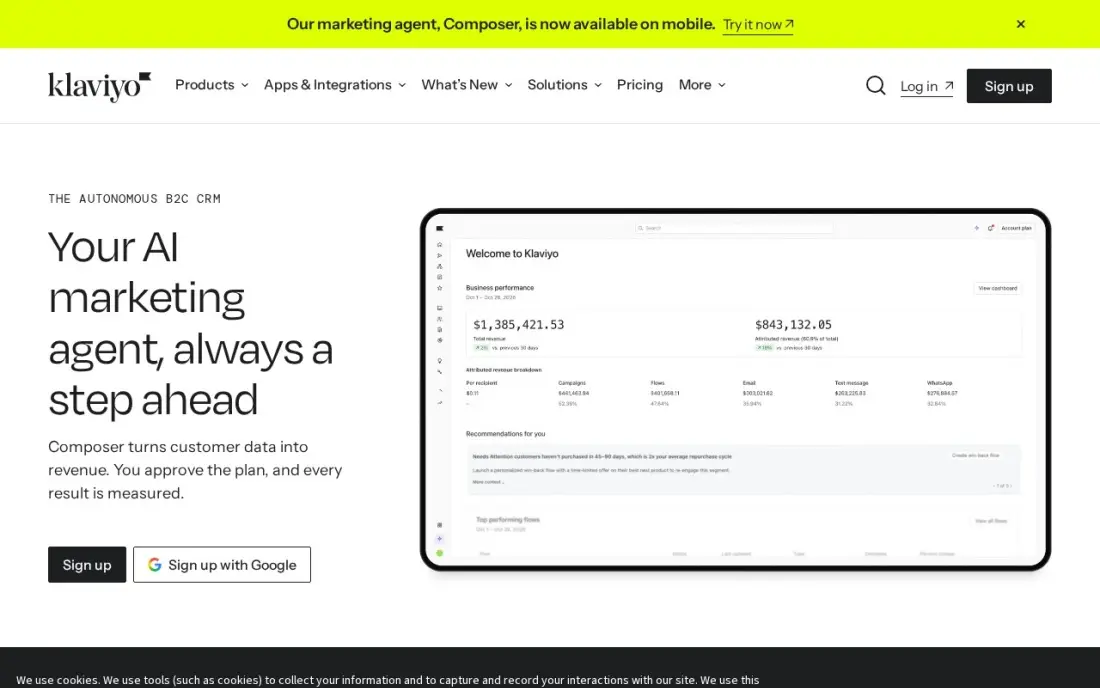
Klaviyo is the closest thing to a purpose-built ecommerce CRM. Every customer profile carries orders, browsing and email and SMS activity, and that data drives segments and automated flows for abandoned carts, post-purchase and win-back, with revenue attributed to each one. Multi-step flows are included on every plan, and only active profiles count toward the bill.
The free plan covers 250 active profiles and 500 emails a month, and Email costs $20 a month for 500 active profiles and 5,000 emails. The bill rises with each profile tier, and the learning curve is steeper than Mailchimp's. Check the renewal price on any first-month offer.
What we like
- Only active profiles count — inactive contacts cost nothing
- Multi-step flows are included on every plan, including the free one
- Deep Shopify integration shows which email actually drove each sale
- SMS credits are included on the free plan
Watch out for
- The bill rises with every profile tier, so a growing list gets dear fast
- The learning curve is steeper than Mailchimp's
- The $1 first-month Marketing offer renews at $25 a month — check the renewal price

Omnisend
Best for: Small stores that want email, SMS and push automation at a low entry price
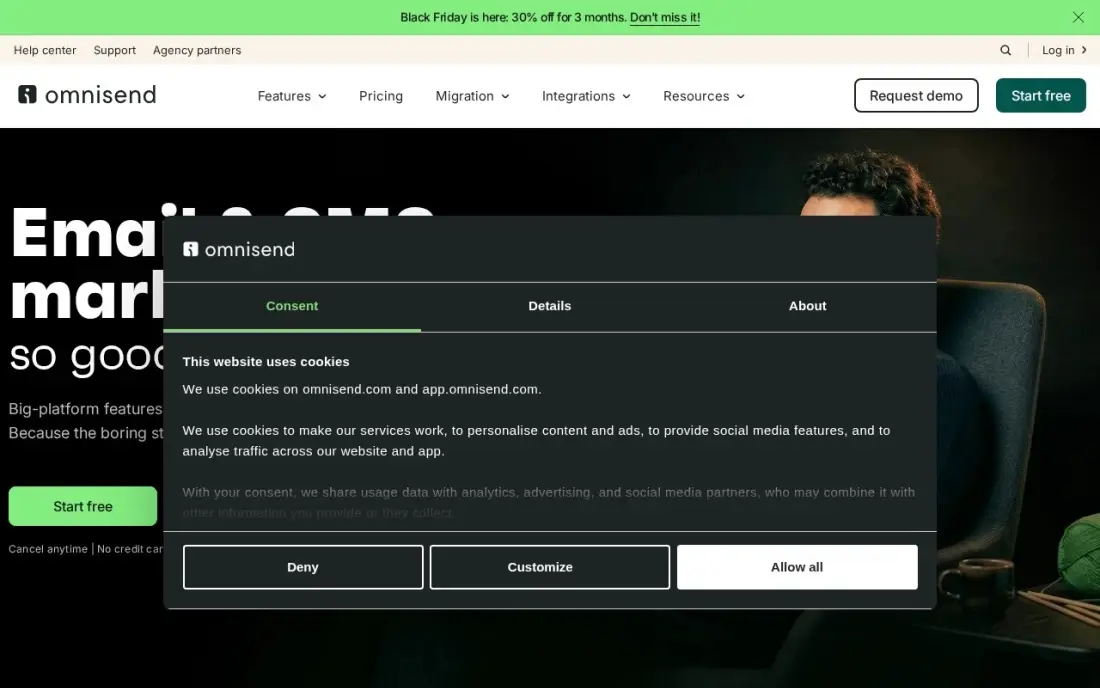
Omnisend runs email, SMS and web push in the same automation workflows, with pre-built ecommerce flows for abandoned carts, browse abandonment and post-purchase sequences. Every feature is on every plan, including the free one, which covers 250 contacts and 500 emails a month, and 24/7 live chat support is included.
Standard costs $16 a month for 500 contacts and 6,000 emails. SMS is Pro-only for accounts created after May 4, 2026, billed as credit packs, there is no annual discount, and advanced reports wait for Pro at $59 a month. It is the best value for a store under a few thousand contacts.
What we like
- Email, SMS and web push run in the same automation workflows, not separate tools
- Every feature is included on every plan, including the free one — no feature gating
- Pre-built ecommerce flows for carts, browse abandonment and post-purchase sequences
- 24/7 live chat and email support on all plans, including the free plan
Watch out for
- SMS is Pro-only for accounts created after May 4, 2026, and is billed separately as credit packs
- No annual billing option, so there is no discount for paying yearly
- Reporting is thinner than Klaviyo, and advanced reports wait for Pro at $59/month

Gorgias
Best for: Online stores that want order data and refunds inside every support conversation
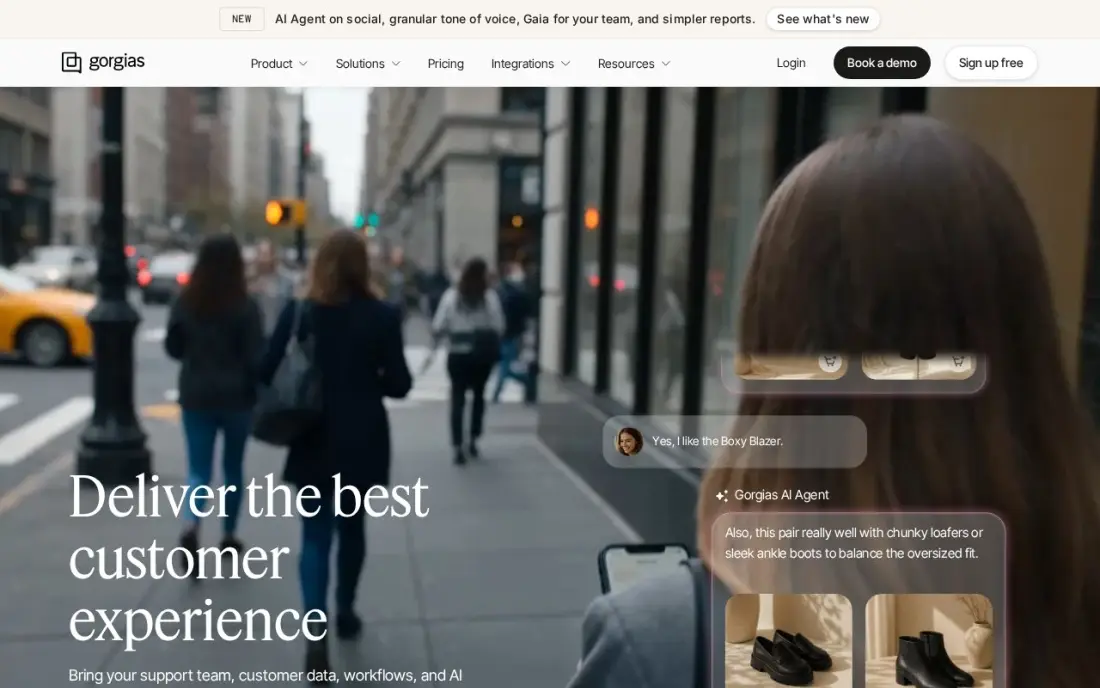
Gorgias is a customer-service CRM for ecommerce: agents see order history, tracking and refunds inside each ticket and can act without opening the store admin. Its AI Agent answers order-status and shipping questions and takes simple order actions on its own, and Gorgias never prices per agent, so adding teammates costs nothing on Basic and above.
Starter costs $10 a month for 50 tickets, billed monthly only, with a 7-day trial. Pricing follows ticket volume, so a holiday spike can push you up a tier, and every AI resolution also counts as a billable ticket. Pair it with Klaviyo or Omnisend for marketing.
What we like
- Agents see order history, tracking and refunds inside the ticket and can act without leaving the inbox
- AI Agent resolves order-status and shipping questions and takes simple order actions on its own
- Never priced per agent, so adding teammates costs nothing on Basic and above
Watch out for
- Every AI Agent resolution also counts as a billable helpdesk ticket, so one answer is billed twice
- Ticket-based pricing means a holiday spike can push you into a higher tier mid-month

Drip
Best for: Stores that want one flat price with every automation feature switched on
Drip sells one plan with everything included: segmentation, pre-built workflows for welcome, cart recovery, post-purchase and win-back, and revenue attribution that ties each flow to the sales it produced. Email sends are unlimited up to 30,000 people, so a busy campaign calendar never adds to the bill.
The plan costs $39 a month for up to 2,500 people, rising to $89 at 5,000 and $154 at 10,000. There is no free plan, only a 14-day trial, and SMS is billed separately from $39 a month. It suits a store that wants advanced automation without plan tiers.
What we like
- One plan with every feature included — no tier hides the automation, segmentation or reporting
- Unlimited email sends up to 30,000 people, so a busy sequence calendar never adds to the bill
- Pre-built workflows for welcome, cart recovery, post-purchase and win-back sequences
- Revenue attribution ties each flow to the sales it produced, not just opens and clicks
Watch out for
- No free plan — only a 14-day trial — and $39 is the highest entry price among the general tools here
- Pricing climbs steeply with list size: $89 at 5,000 people and $154 at 10,000
- SMS is billed separately from $39 a month, on top of the email price

ActiveCampaign
Best for: Stores that want a built-in sales CRM alongside journey automation
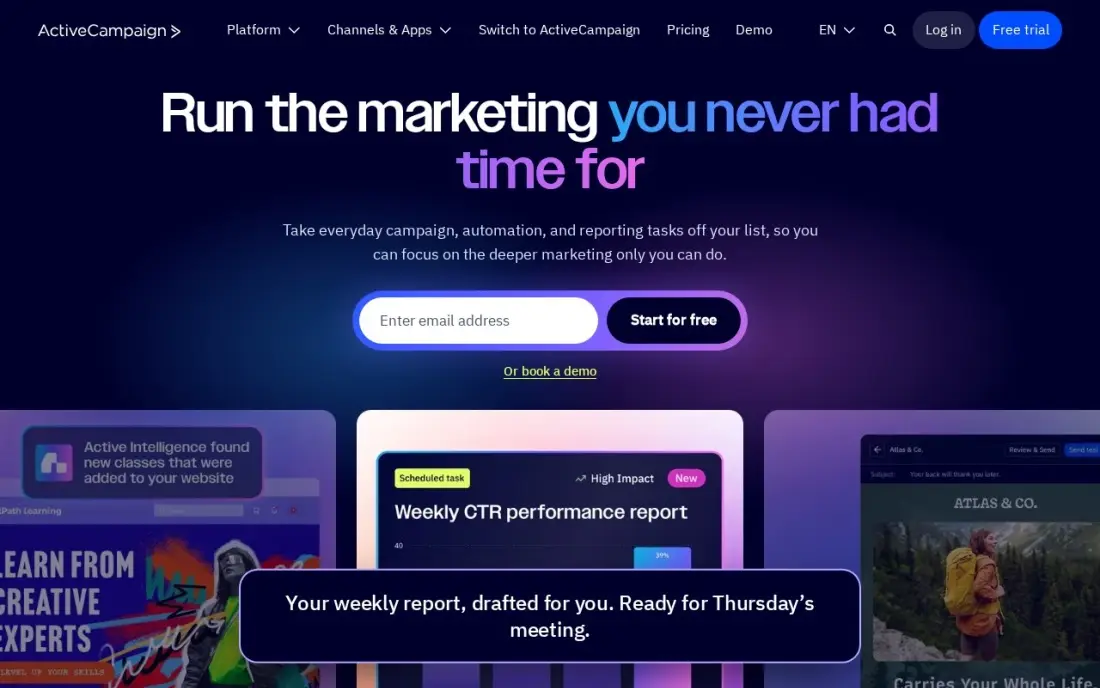
ActiveCampaign combines marketing automation with a built-in CRM on every plan, so a store can run welcome, abandoned-cart and win-back journeys and also track deals for wholesale or high-value customers. More than 950 ready-made automation recipes help a small team start, and Starter allows sends of 10 times the contact limit.
Starter costs $15 a month billed annually at 1,000 contacts, or $19 billed monthly, rising to $149 at 10,000 contacts. Each automation is capped at five actions on Starter, so branching flows need Plus at $49, and there is no free plan.
What we like
- The cheapest journey automation here: a welcome series, abandoned-cart flow and win-back campaign for $15 a month
- A built-in CRM on every plan, with 950+ ready-made automation recipes, per ActiveCampaign's pricing page
- Send allowance of 10 times the contact limit on Starter and Plus
Watch out for
- The price follows the contact list: Starter rises from $15 at 1,000 contacts to $149 at 10,000
- Each automation is capped at five actions on Starter, so branching flows need Plus at $49
- No free plan — only a 14-day trial — and AI, SMS and extra users are paid add-ons

Mailchimp
Best for: New stores that want a familiar email tool with a free start
Mailchimp is the email tool most store owners already know, and it keeps contacts, purchase data from connected stores, an SMS add-on and a website builder in one account. The free plan covers 250 contacts and 500 sends a month, and Essentials includes 500 contacts for $13 a month.
Multi-step automation needs Standard at $20 a month, not Essentials, and the price climbs quickly as the contact list grows, since contacts rather than sends set the bill. SMS costs extra on every plan. It is a reasonable first step; dedicated ecommerce tools such as Klaviyo and Omnisend go further.
What we like
- A free plan covers a tiny list at $0, with 250 contacts and 500 sends a month
- SMS add-on and a website builder sit in the same account as the email
- Predictive segments and send-time optimization come with Standard
- 500 contacts are included at the $13 entry price
Watch out for
- The price climbs fast as the list grows — contacts, not sends, set the bill
- Multi-step automation needs Standard at $20 a month, not Essentials
- SMS costs extra on every plan

HubSpot CRM
Best for: Stores with wholesale, B2B or high-touch sales that need a free deal pipeline
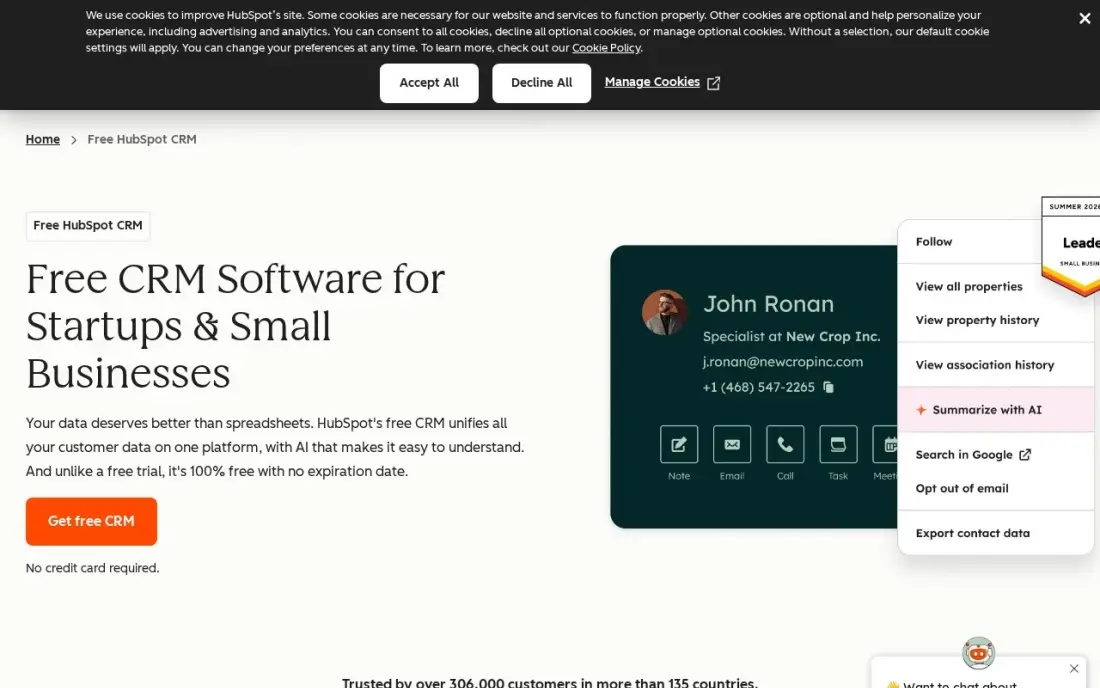
HubSpot CRM fits the sales side of an ecommerce business: wholesale buyers, corporate gifting orders and high-value customers who need a salesperson. The free CRM includes unlimited contacts and companies, one deal pipeline and email tracking for up to two users, and every contact keeps emails, calls and deals on one timeline.
A third user needs a Starter seat at $20 a month, and automation and reporting wait for Professional at $90 a seat a month. It is not a replacement for Klaviyo-style flows; many stores run HubSpot for B2B deals and an ecommerce email tool for shoppers.
What we like
- Free CRM with unlimited contacts and companies, one deal pipeline and email tracking
- Every contact carries its full history — emails, calls, meetings and deals — on one timeline
- Apps on iOS, Android, Windows and Mac, plus a web app that syncs everywhere
Watch out for
- Two free users only — a third teammate forces a paid Starter seat at $20/month
- Automation and reporting live on Professional at $90/seat/month, a steep step up

Zoho CRM
Best for: Budget-conscious stores with a small sales team handling B2B accounts
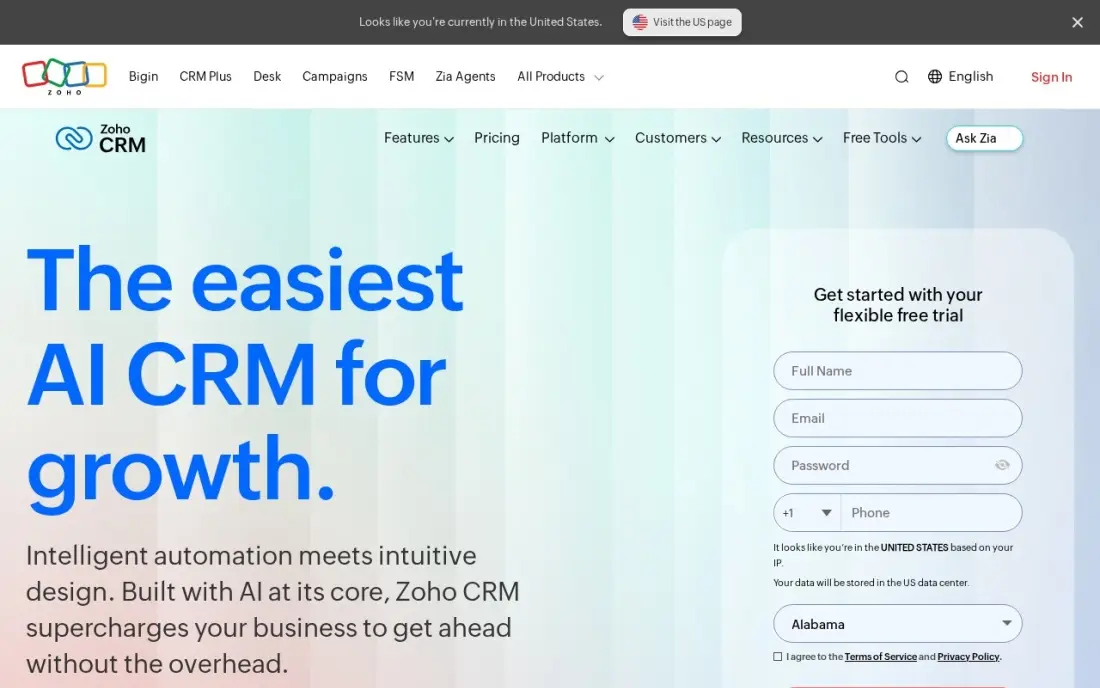
Zoho CRM covers the same B2B sales job as HubSpot but stretches further for free: the plan covers up to three users with pipelines, leads and contacts. Standard costs $14 a user a month billed annually, or $20 billed monthly, with Professional at $23 and Enterprise at $40 billed annually.
Zia, Zoho's AI assistant, needs Enterprise, G2 reviewers rate ease of setup lower than rivals, and add-ons for support and storage sit outside the seat price. For a store with a small wholesale team, it is the cheapest full CRM ladder here.
What we like
- Free plan covers up to 3 users with pipelines, leads and contacts — the only free tier here that fits a tiny team, not just a solo user
- Zia, Zoho's AI assistant, predicts deal outcomes, flags anomalies and suggests the best time to contact a lead on Enterprise and the top tier
- The cheapest full-featured ladder here: Standard $14, Professional $23 and Enterprise $40 a user a month billed annually
Watch out for
- Zia's predictions and AI features need Enterprise at $40 a user a month — Standard buyers get scoring rules, not the AI assistant
- G2 reviewers rate ease of setup 8.0, the lowest here, and support scores trail HubSpot and Pipedrive
- Add-ons for support tiers, storage and training sit outside the seat price, so the invoice can exceed the plan price
The best CRM software for ecommerce knows every customer by what they bought, browsed and asked about, and uses that to bring them back: a reminder about the cart they left, a thank-you after the first order, a win-back offer when they go quiet. We compared eight CRM tools for online stores, from ecommerce marketing platforms to support and sales CRMs, on customer profiles, order data, automation, free plans and real cost. Every price comes from the vendor's own pricing page, checked in November 2026.
How to choose the best CRM software for ecommerce
- Start with your store platform. The CRM must pull orders, products and browsing data from Shopify, WooCommerce or BigCommerce reliably.
- Check which flows are included. Abandoned cart, post-purchase and win-back flows earn most of the revenue; make sure your plan includes them.
- Understand the pricing meter. Profiles, contacts, sends, tickets and seats all drive different bills; model your list a year from now.
- Decide whether you need SMS. Some tools include SMS, others bill it separately or only on higher plans.
- Separate marketing, support and sales. Shopper marketing, customer service and B2B deals are different jobs, and one tool rarely does all three well.
- Look for revenue attribution. Reports that show which flow produced which sale tell you what to keep.
A CRM brings customers back; search brings the first visit. Our guide to SEO for ecommerce covers the fixes most stores need, and the free UTM builder tags email and SMS links so analytics shows which campaigns drove sales.
CRM software for ecommerce pricing: what you will actually pay
Take a store with 500 subscribers today. Klaviyo Email costs $20 a month, or $240 a year; Omnisend Standard costs $16 a month, or $192, with no annual discount; and Mailchimp Essentials costs $13 a month, or $156, though multi-step automation needs Standard at $20. ActiveCampaign Starter costs $15 a month billed annually at 1,000 contacts, or $180 a year. Drip costs $39 a month, or $468 a year, but covers up to 2,500 people with unlimited sends.
Growth changes the order. At 10,000 people, Drip costs $154 a month and ActiveCampaign Starter $149, so price the list you expect next year. Support is a separate bill: Gorgias Starter costs $10 a month for 50 tickets. For a wholesale team, HubSpot's free CRM covers two users and Zoho's three, with paid seats from $20 a month on HubSpot Starter and $14 a user a month billed annually on Zoho Standard.
Know the difference: ecommerce marketing CRM vs sales CRM
An ecommerce marketing CRM, such as Klaviyo, Omnisend, Drip or Mailchimp, builds a profile for every shopper from orders, browsing and campaign activity and sends automated messages based on what they do. It is built for thousands of customers who buy on their own at checkout, and it measures success in repeat orders and revenue per recipient.
A sales CRM, such as HubSpot, Zoho or the CRM inside ActiveCampaign, tracks deals through a pipeline: a wholesale buyer asking for a price list, a corporate gifting order or a high-value customer who needs a call. Most online stores need the first type; stores with B2B or wholesale sales add the second.
Quick comparison: tool type by need
| Buyer | Best pick | Why |
|---|---|---|
| Most online stores | Klaviyo | Order-based profiles and flows, Email from $20/month |
| Small stores on a budget | Omnisend | Email, SMS and push from $16/month |
| Customer support | Gorgias | Order data in every ticket, from $10/month |
| Flat-price automation | Drip | Every feature, $39/month up to 2,500 people |
| Automation plus deals | ActiveCampaign | Built-in CRM, Starter $15/month billed annually |
| Familiar free start | Mailchimp | Free plan, Essentials $13/month |
| Wholesale pipelines | HubSpot CRM | Free for up to 2 users |
| Small B2B sales teams | Zoho CRM | Free for 3 users, Standard $14/user/month billed annually |
Mistakes to avoid
- Sending campaigns before flows. Abandoned cart and welcome flows earn every day; set them up before weekly newsletters.
- Paying for inactive contacts. Suppress or remove subscribers who never open, or choose a tool that bills only active profiles.
- Ignoring consent rules. Email and SMS marketing need recorded opt-in; check the tool captures it at checkout.
- Running separate customer lists. If the store, email tool and help desk do not share data, customers get messages that ignore their last order or complaint.
- Measuring opens instead of revenue. Judge flows by orders and revenue per recipient, not open rates.
How we chose
We checked each vendor's pricing page in November 2026 and recorded the starting price exactly as shown, with annual-billing rates where listed. We compared the eight tools on ecommerce data integration, included automation, SMS, support features, free plans and cost as a list grows. Ratings come from G2 pages checked on the dates shown in the sources; tools without a rating we verified show none. No vendor paid for a place in this list, and none of the links here are affiliate links.
What to do next
Connect your store to the free plan of your top choice and switch on three flows this week: welcome, abandoned cart and post-purchase. After 30 days, compare the revenue they produced with the cost of the next plan. Book a free ecommerce growth review.
Frequently asked questions
What is the best CRM software for ecommerce?
Klaviyo is the best ecommerce CRM for most online stores, with customer profiles built from order data and automated flows on every plan; Email starts at $20 a month. Omnisend is the budget pick from $16 a month.
Is there a free CRM for ecommerce?
Yes. Klaviyo's free plan covers 250 active profiles, Omnisend's 250 contacts, Mailchimp's 250 contacts, HubSpot's free CRM 2 users and Zoho CRM's free plan 3 users.
Do online stores need a CRM?
Most need customer profiles tied to orders, which ecommerce email platforms such as Klaviyo and Omnisend provide. A sales CRM such as HubSpot or Zoho is only needed for wholesale, B2B or high-touch sales.
What is the difference between an ecommerce CRM and a regular CRM?
An ecommerce CRM builds profiles from orders and browsing and automates marketing to shoppers. A regular CRM tracks deals moving through a sales pipeline, which suits B2B sales rather than consumer checkout.
How much does an ecommerce CRM cost?
On published prices, Gorgias Starter costs $10 a month, Omnisend Standard $16, Klaviyo Email $20, ActiveCampaign Starter $15 a month billed annually and Drip $39 for up to 2,500 people. Costs rise with list size or ticket volume.
Which CRM integrates best with Shopify?
Klaviyo has the deepest Shopify integration here, showing which email drove each sale. Gorgias puts Shopify order data inside support tickets, and Omnisend includes pre-built Shopify flows.
Sources we checked (16)
- Klaviyo — www.klaviyo.com/grow/pricing-packages (checked November 12, 2026)
- Klaviyo reviews on G2 (checked November 12, 2026)
- Omnisend — www.omnisend.com/pricing (checked November 6, 2026)
- Omnisend reviews on G2 (checked November 6, 2026)
- Gorgias — www.gorgias.com/pricing (checked November 2, 2026)
- Gorgias reviews on G2 (checked November 2, 2026)
- Drip — www.drip.com/pricing (checked November 6, 2026)
- Drip reviews on G2 (checked November 6, 2026)
- ActiveCampaign — www.activecampaign.com/pricing (checked November 12, 2026)
- ActiveCampaign reviews on G2 (checked November 12, 2026)
- Mailchimp — mailchimp.com/pricing (checked November 12, 2026)
- Mailchimp reviews on G2 (checked November 12, 2026)
- HubSpot CRM — www.hubspot.com/products/crm (checked November 12, 2026)
- HubSpot CRM reviews on G2 (checked November 12, 2026)
- Zoho CRM — www.zoho.com/crm/pricing (checked November 12, 2026)
- Zoho CRM reviews on G2 (checked November 12, 2026)
Make one of these tools?
We re-check this list every quarter. Send a correction, request a review, or ask about a clearly labeled sponsored spot.
Request a listingShamim
Founder of SerpAstra
A full-stack SEO and digital marketer who spends most days on Local SEO for dental practices, AI search visibility and lead generation.
Free SEO and AI visibility audit
Find out what is holding your rankings back
Send us your site. Within 2 business days you get a written audit, an AI visibility check and a short fix list ranked by impact. Free, with no contract attached.
Request my free audit→Related buying guides
 Ecommerce12 Best Email Marketing Platforms for Ecommerce in 2026, Compared12 best email marketing platforms for ecommerce compared on real starting prices, free plans and store automation. Klaviyo $20/month, Brevo $9.Read guide →
 Sales & CRM8 Best B2C CRM Software in 2026: Pricing, Features and Pros & ConsCompare the 8 best b2c crm software options for small teams on price, free plans and automation, with every starting price checked November 12, 2026.Read guide →
 Ecommerce12 Best Marketing Platforms for Ecommerce in 2026, ComparedCompare the 12 best marketing platform for ecommerce picks on price, free plans, email and SMS, with every live price verified November 5, 2026.Read guide →